![SoftPro Chlorine+ Carbon Whole House Water Filter to Remove Chlorine, Chloramine & Pesticides [City Water Filters Series]](http://myhomewaterfilter.com/cdn/shop/files/SoftPro_Whole_House_Carbon_Filter_Chlorine_70aedb15-14a1-4eab-9c70-260f47a6f6f4.webp?v=1769133629&width=140)


![SoftPro Iron Filter - Iron Master AIO - Best Iron Filter for Well Water [Air Injected Water Filter / Katalox]](http://myhomewaterfilter.com/cdn/shop/files/SoftPro_AIO_Iron_Master_-_Best_Whole_House_Iron_Filter.webp?v=1769133505&width=140)


 1-866-278-4130







Why Most City Water Homes Have This Problem, and the Mechanism That Resolves It
The U.S. Geological Survey estimates: More than 85% of homes on city water supplies carry elevated dissolved calcium and magnesium — a figure worth stating plainly because it means this is not an edge-case problem being sold as universal; it's a near-universal condition being under-addressed.
The Elite treats water:
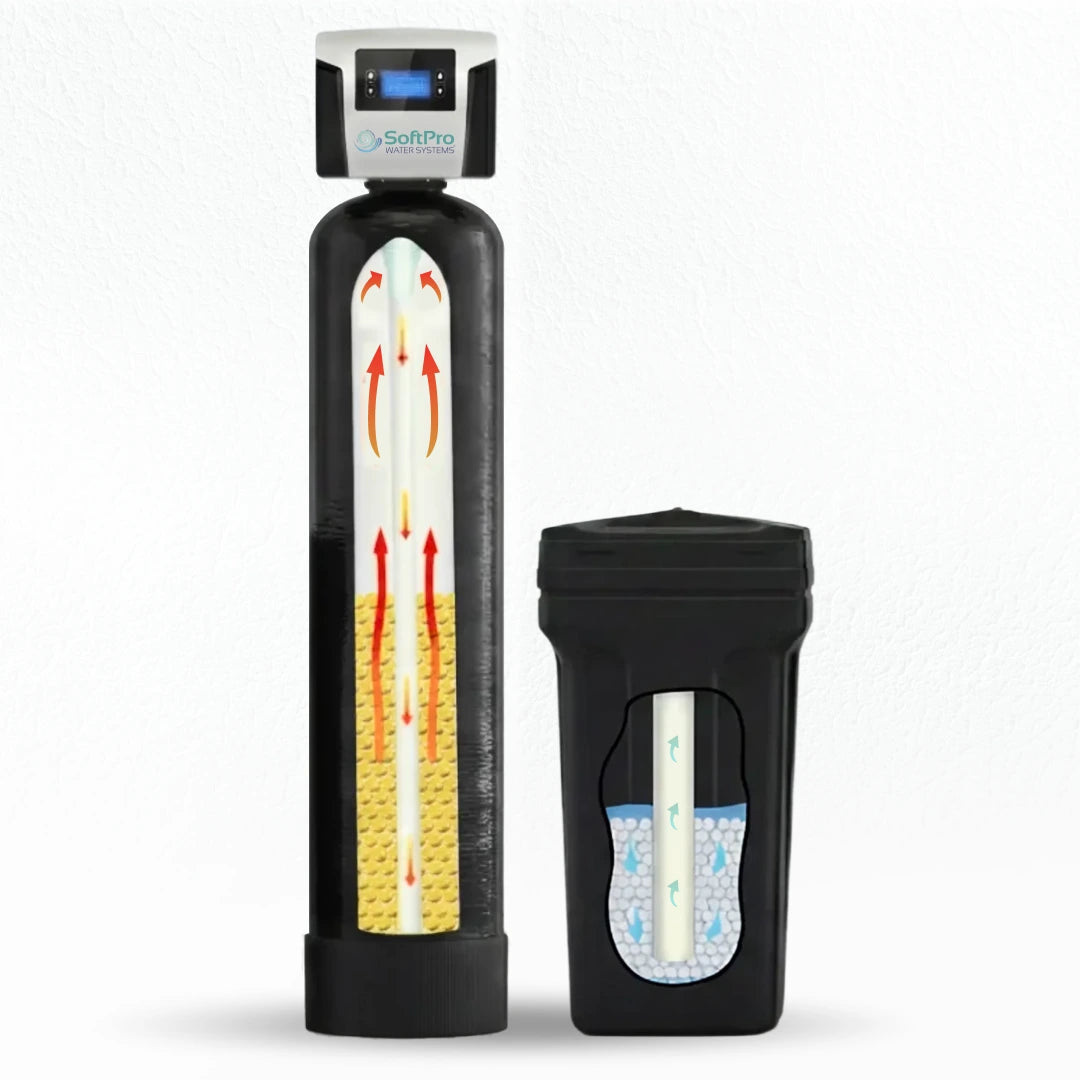
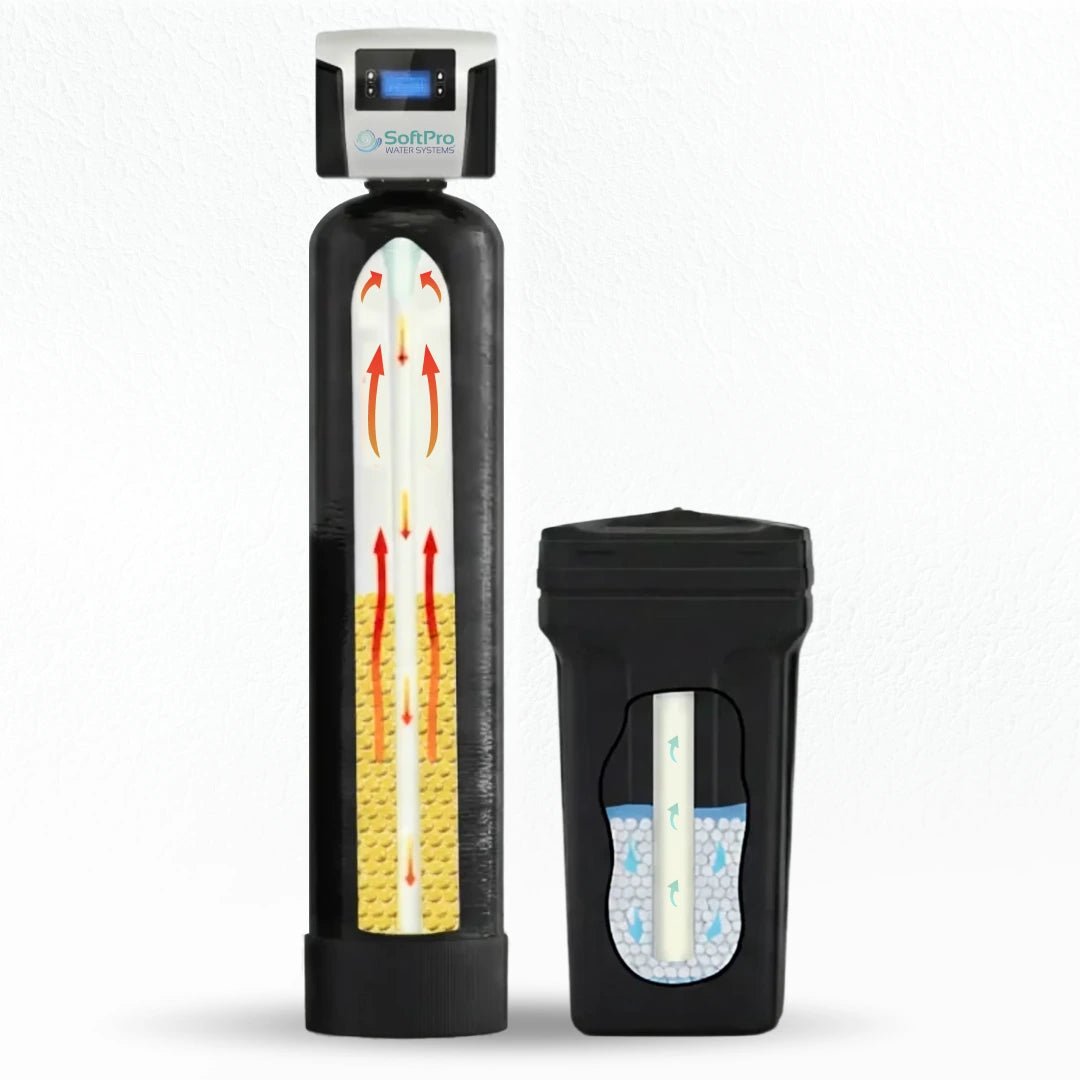
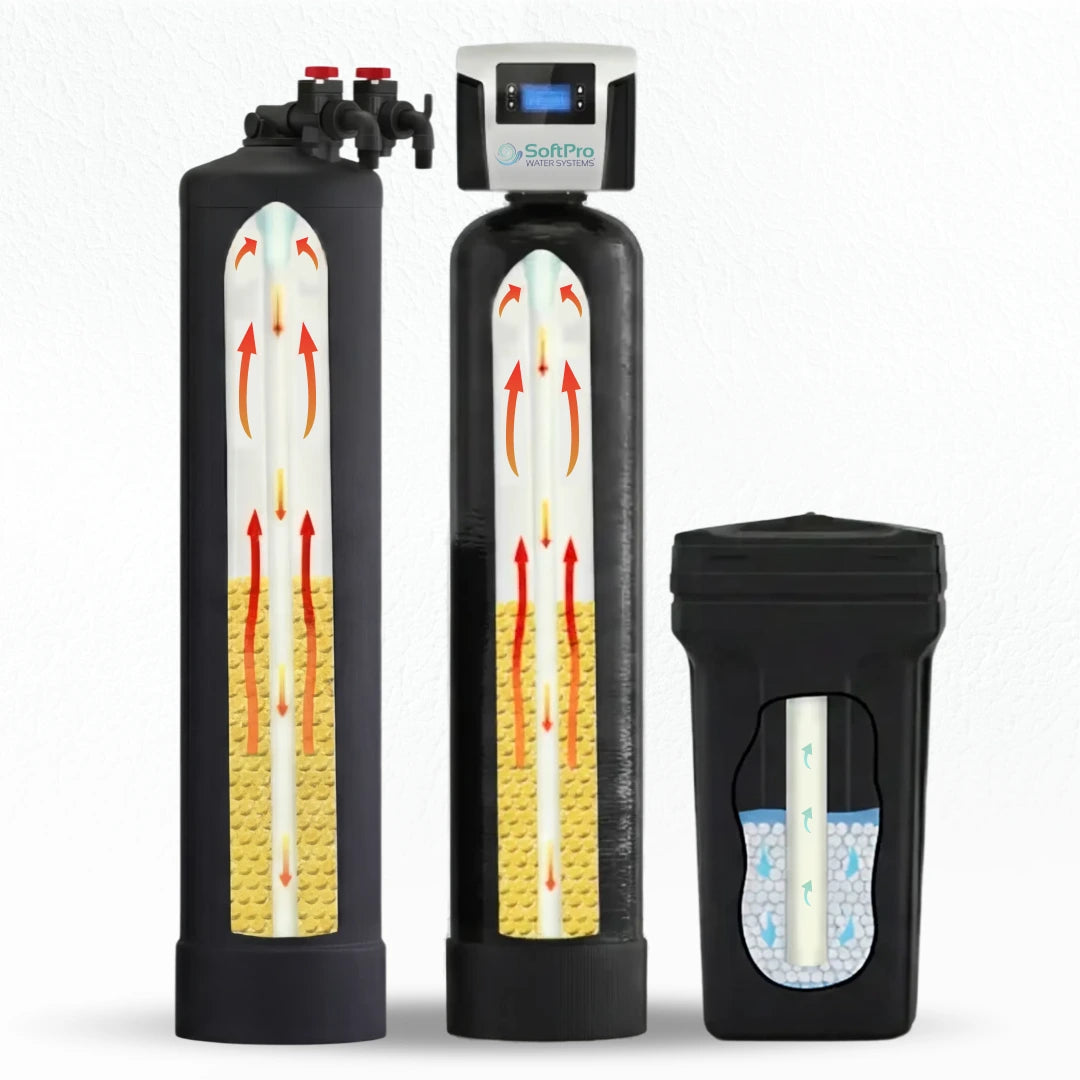
At the point your city line enters the home, using ion exchange: water passes through a bed of high-capacity sulfonated resin, where calcium and magnesium ions are captured and exchanged for sodium ions. The result is soft water delivered to every tap, shower, and appliance — whole-house treatment, structurally different from a pitcher or under-sink device that treats water at a single point of use.
The specific engineering:
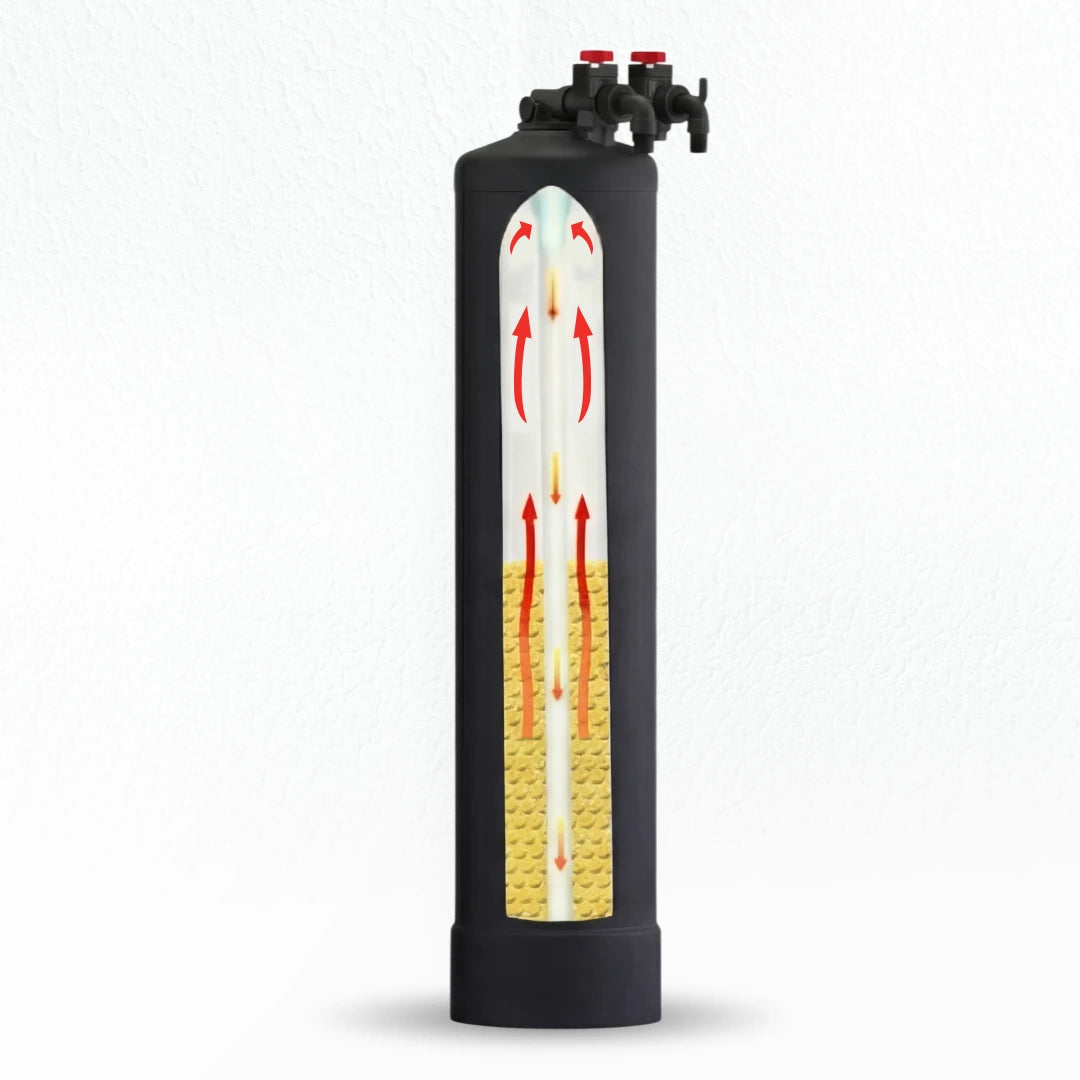
Choice that differentiates the Elite from conventional softeners is upflow regeneration. Most softeners regenerate by pushing brine downward through the entire resin bed, including the upper portion that remains fully charged — consuming salt on media that didn't need regenerating. The Elite delivers brine upward through only the depleted zone, preserving already-charged resin for immediate use. The measured result: 25–30% less salt consumed per cycle, with no reduction in softening output.
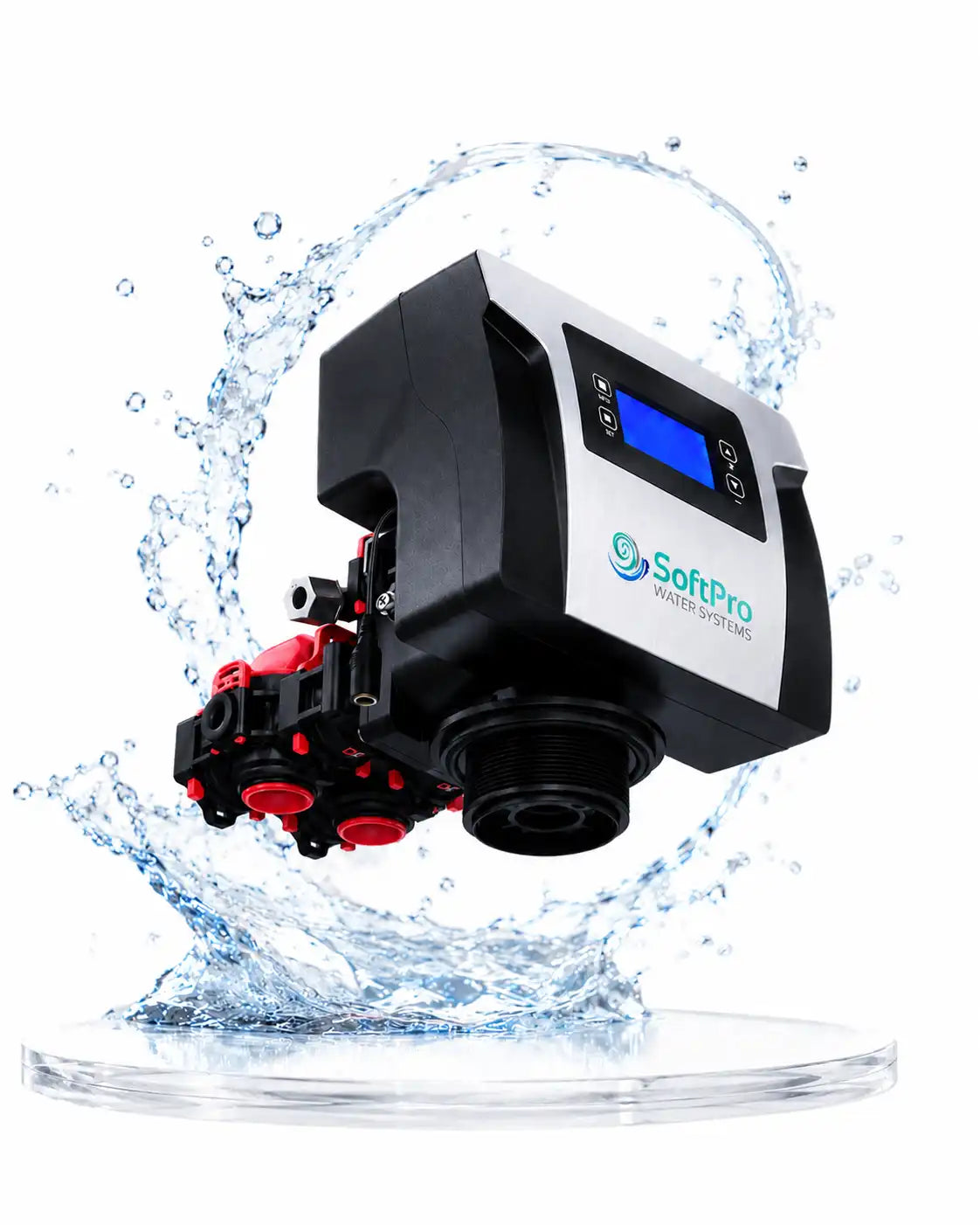
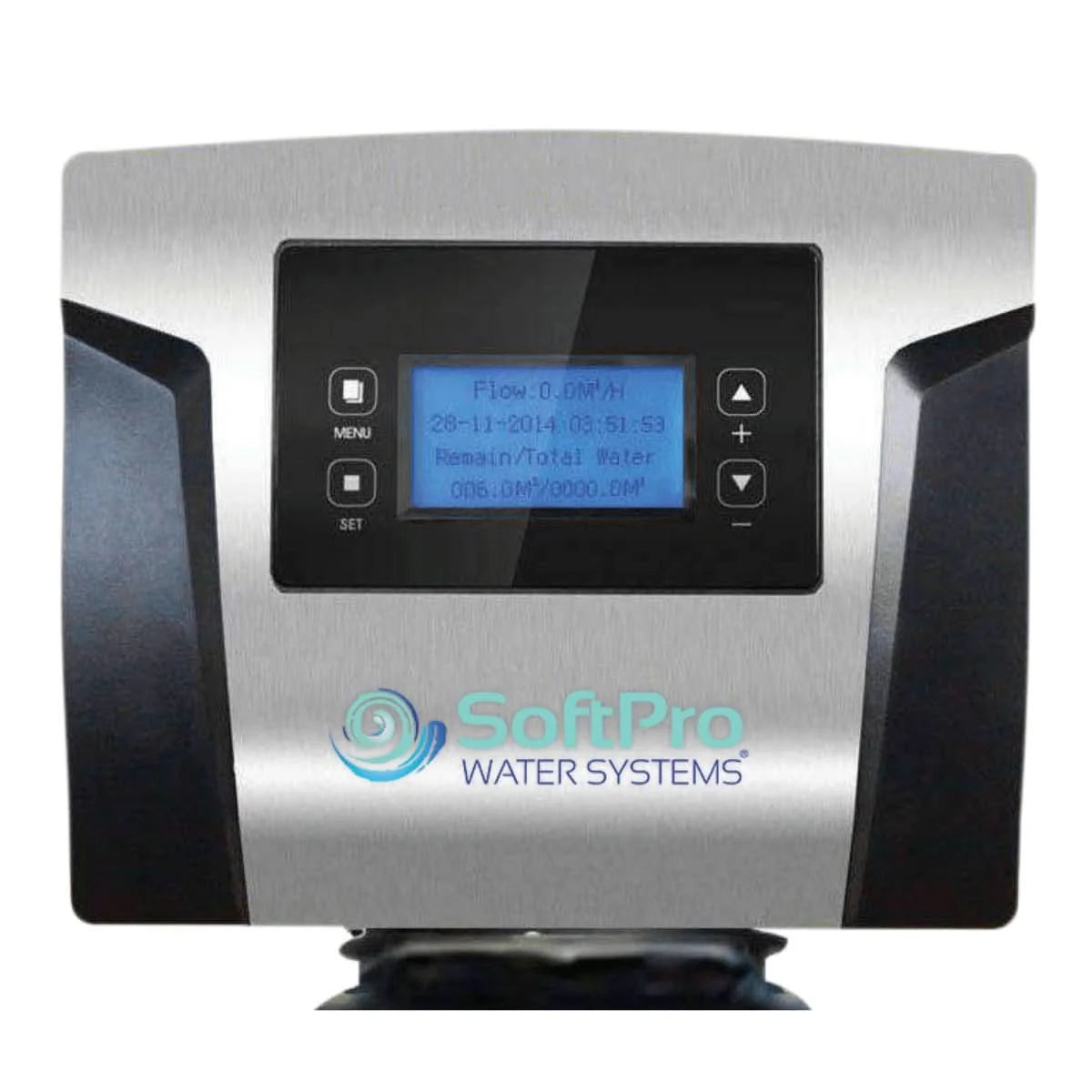
A metered control valve:
Extends this efficiency further: rather than regenerating on a fixed schedule regardless of actual use, it tracks cumulative water flow through an internal turbine meter and initiates regeneration only when the resin's capacity has genuinely been depleted. Usage varies, so the schedule varies with it — which is the specific mechanism behind the salt savings claimed elsewhere on this page.