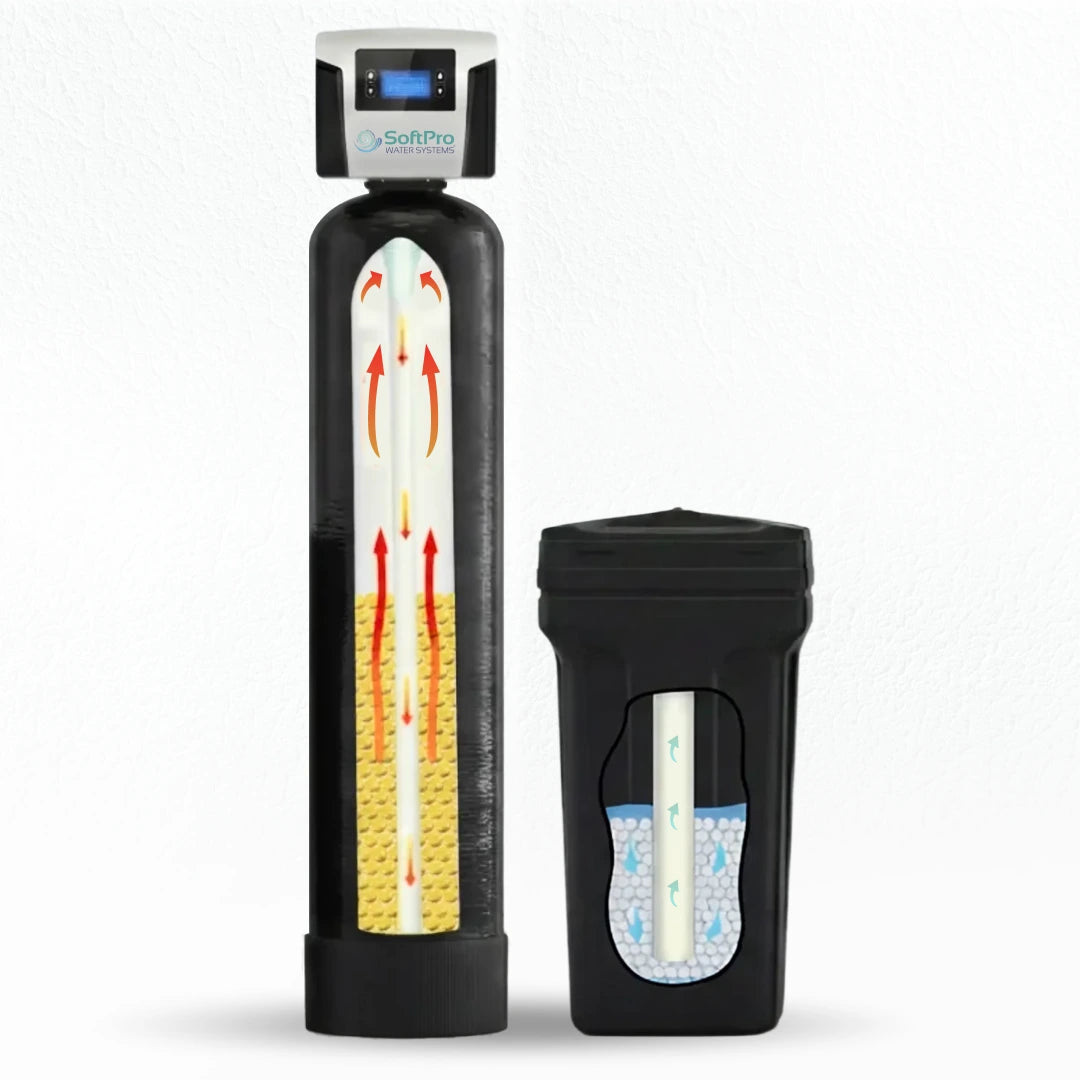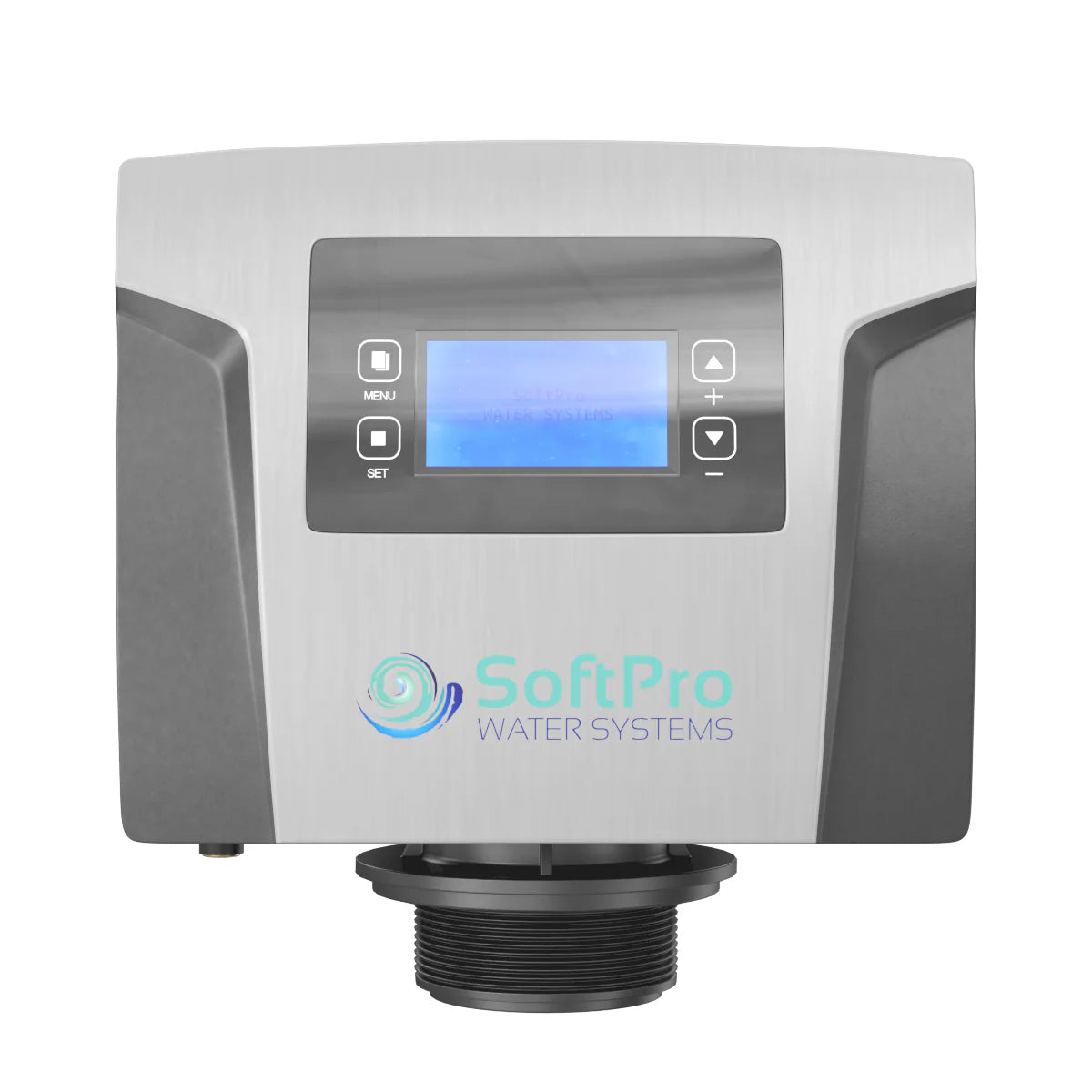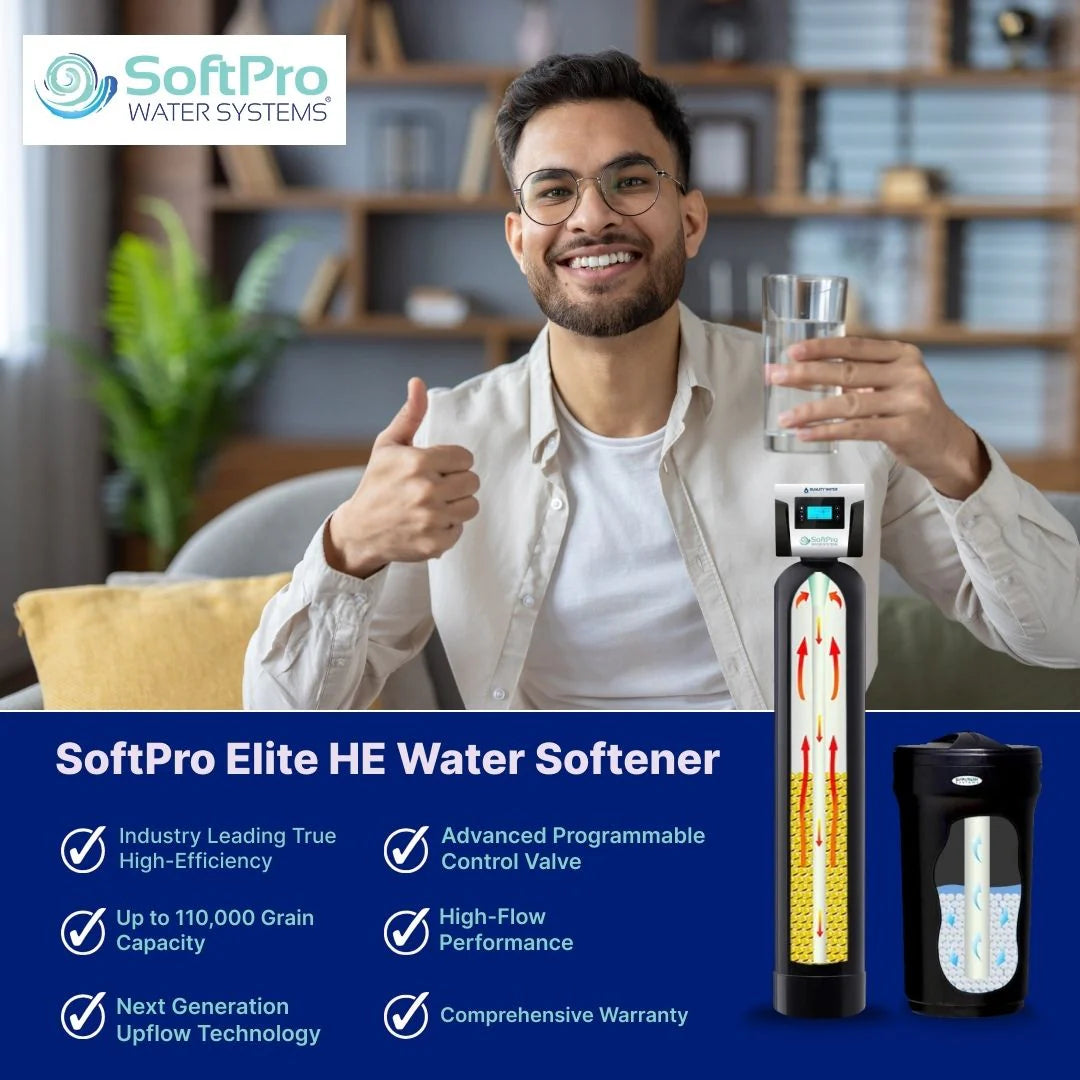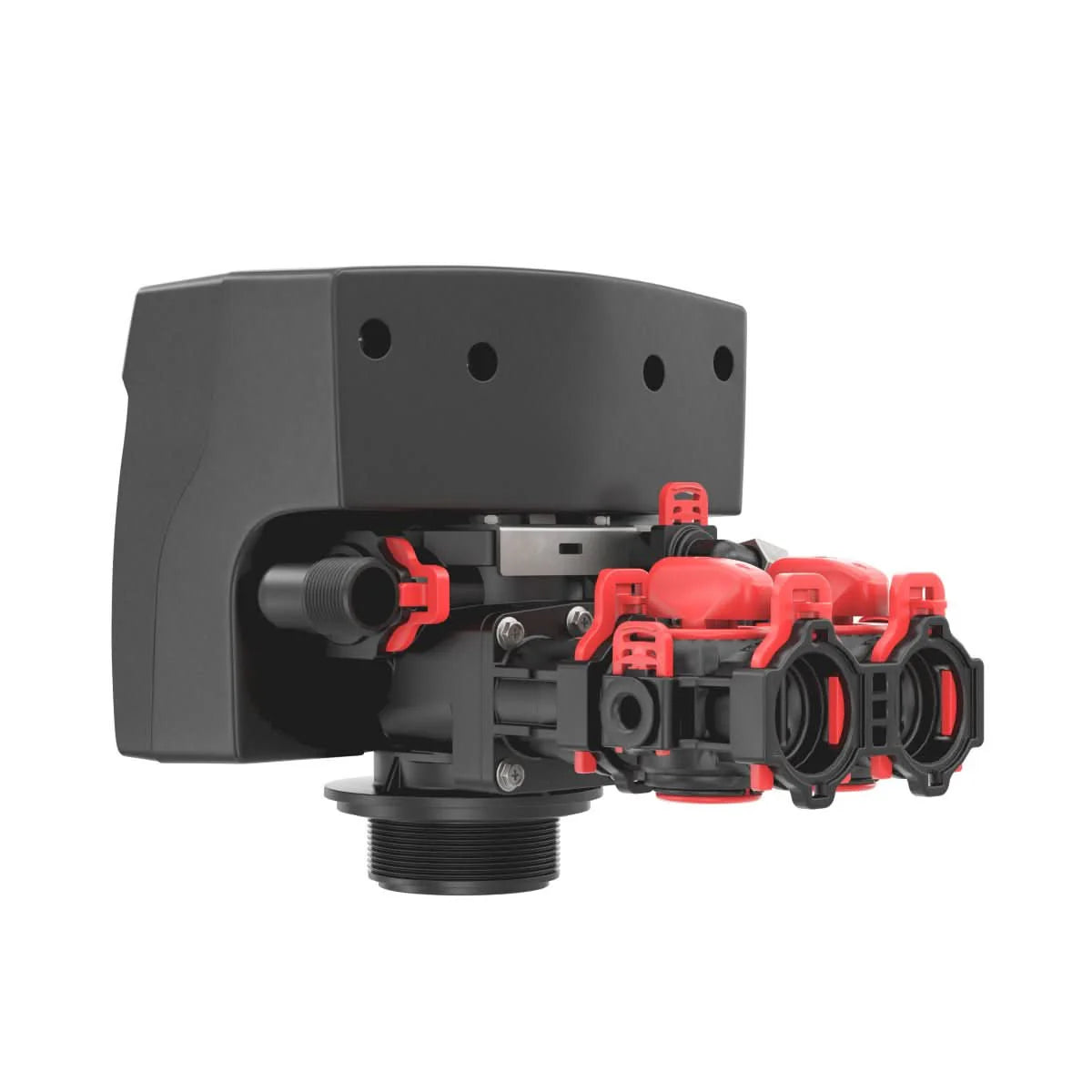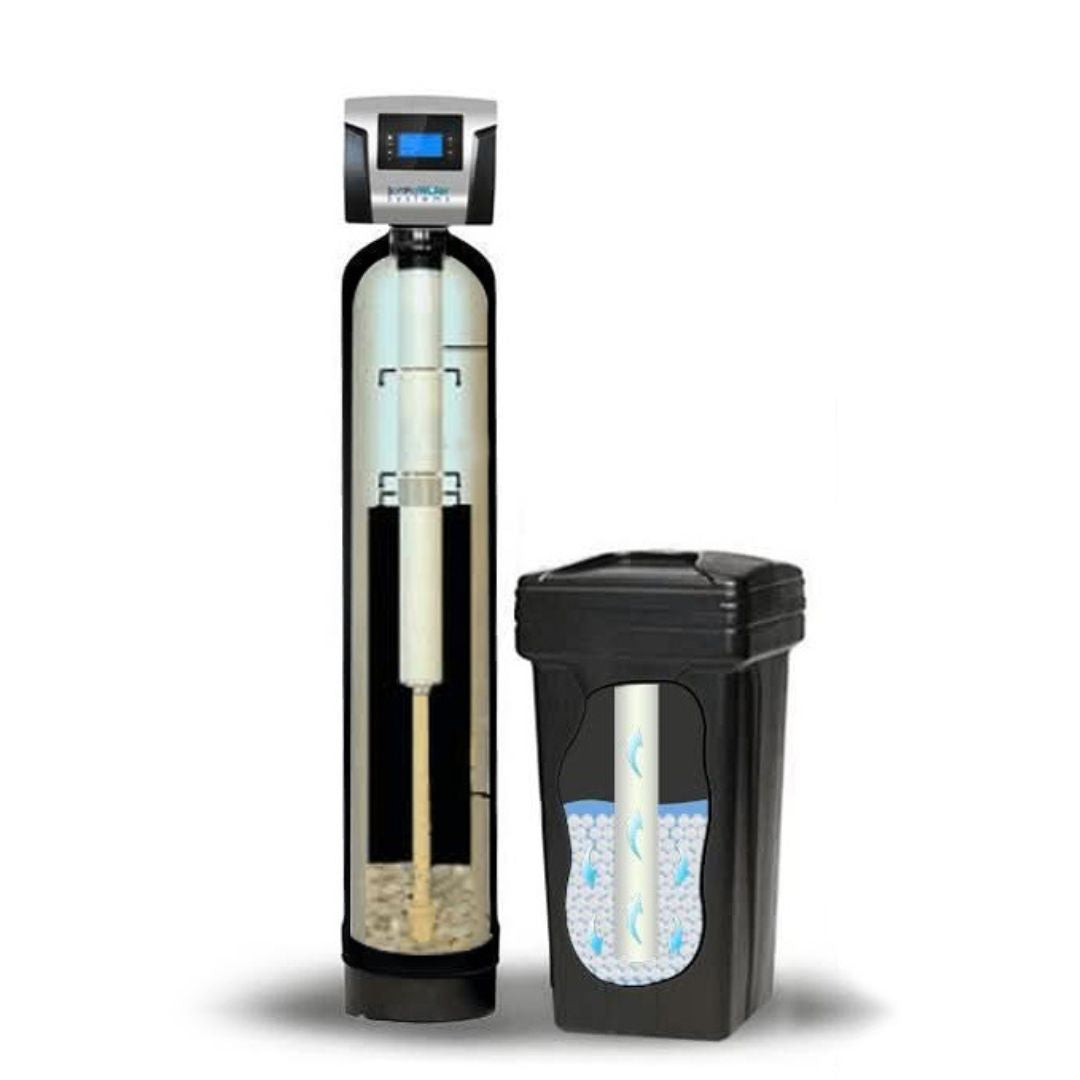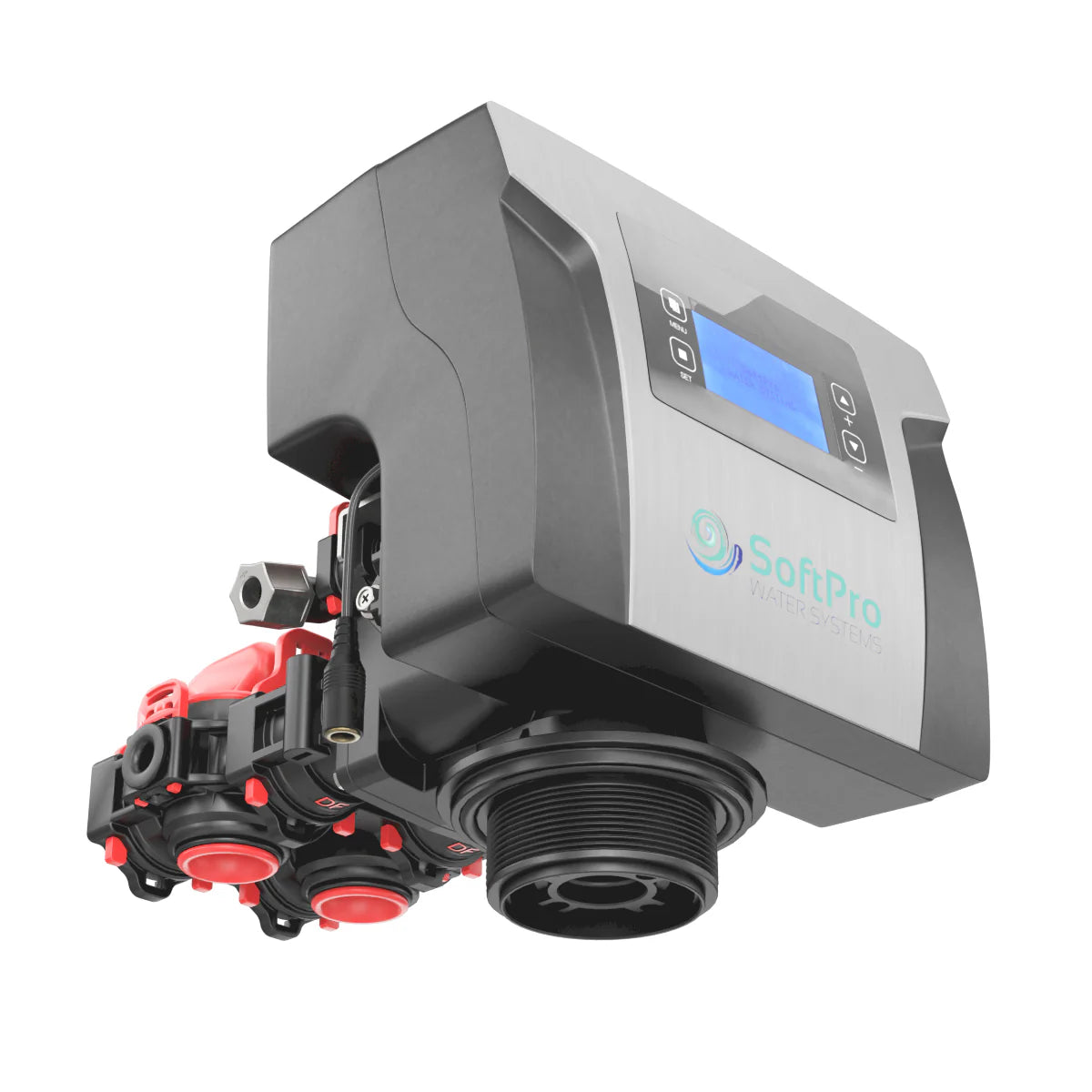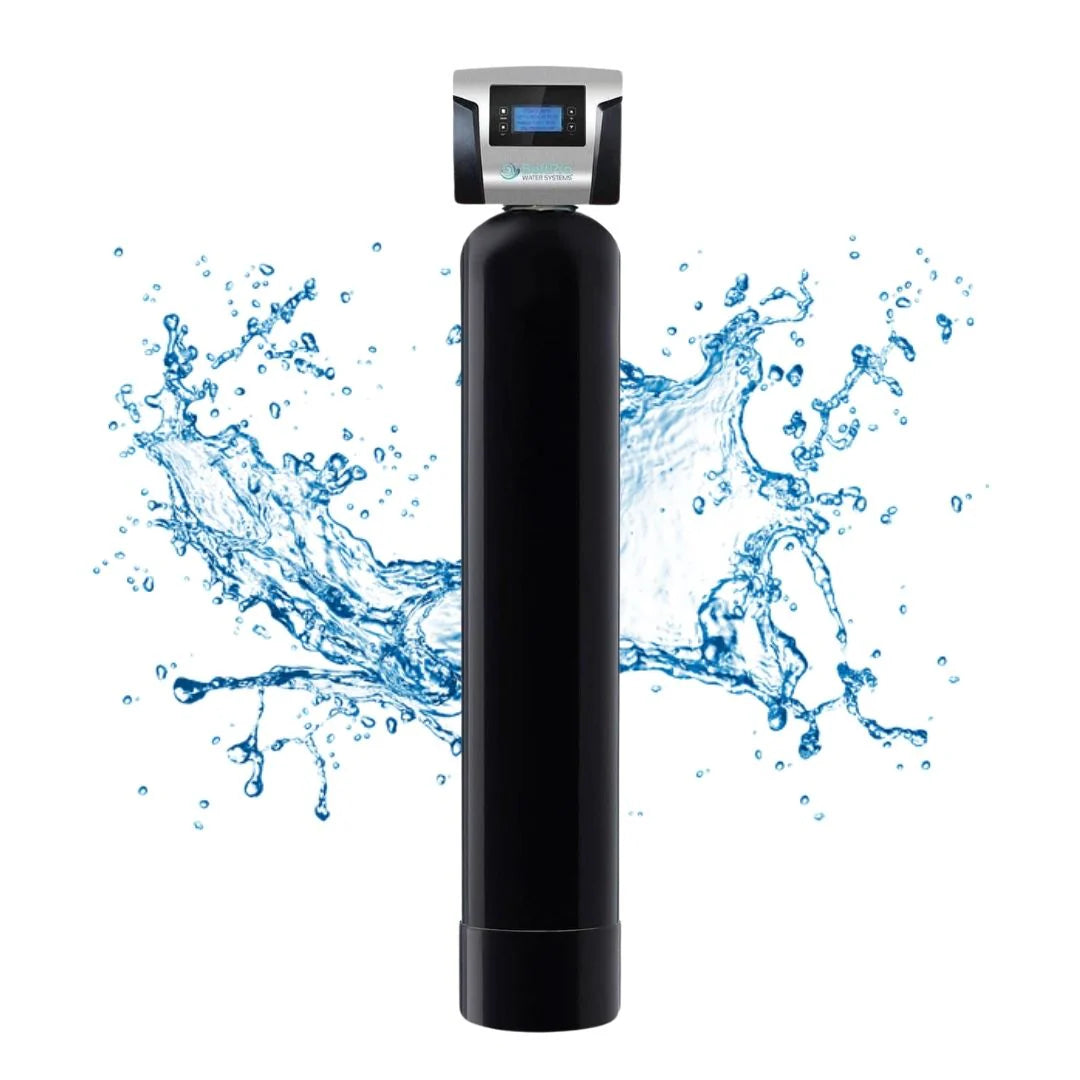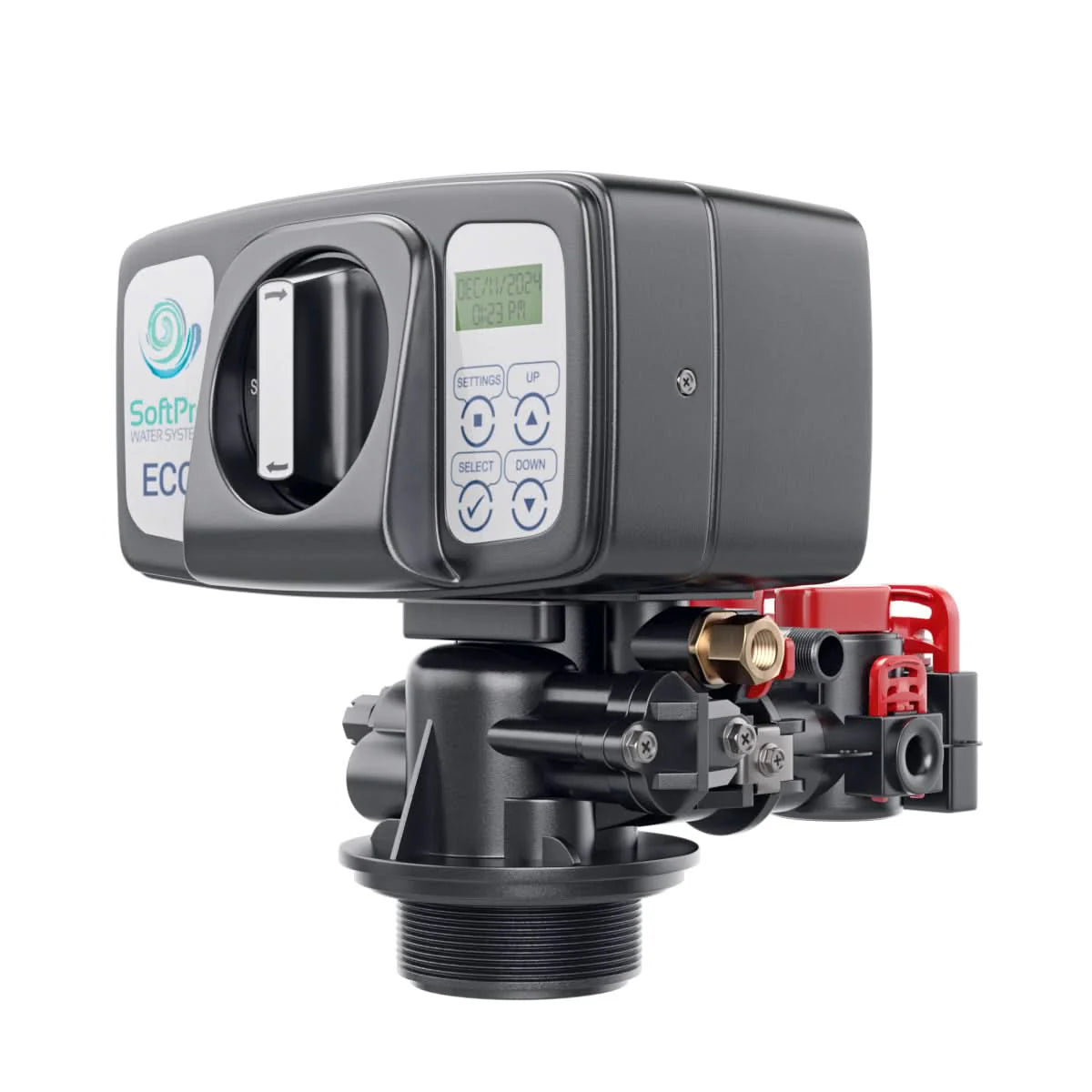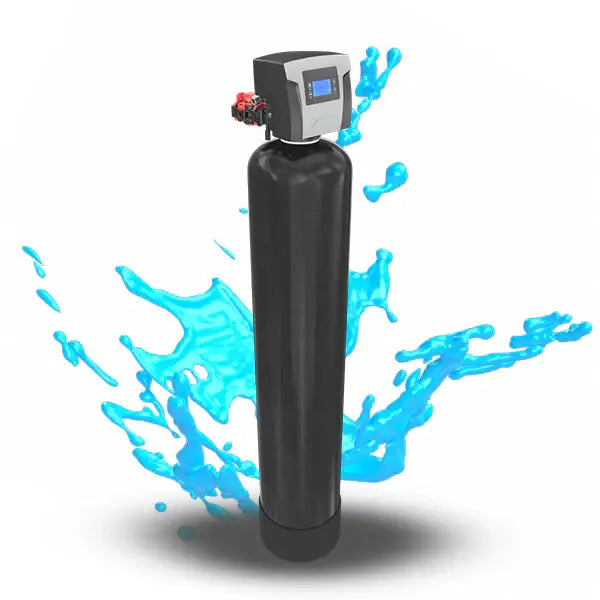
SoftPro™ Elite HE Water Softener for Well Water (Best Seller & Lifetime Warranty)

Iron-resistant 10% crosslink resin, upflow regeneration calibrated for well water's higher iron loading, and optional pre-treatment matched to your specific contaminant profile.

$2,231.67
$1,327
Save 41%
In stock. Shipped within 1-3 days.
  • check FACTORY-DIRECT SAVINGS
  • check BUILT IN USA
  • check EASY INSTALLATION
  • check FREE SHIPPING
  • check LIFETIME WARRANTY
  • check 60-DAY MONEY BACK GUARANTEE
32000
32000
40000
48000
64000
Softener ONLY
Softener ONLY
Softener + KDF
Softener + Pro Iron Filter
6 to 7 GPM
6 to 7 GPM
8 to 10 GPM
11+ GPM

100% Secure Checkout

Guaranteed Secure

  • American Express
  • Apple Pay
  • Diners Club
  • Discover
  • Google Pay
  • Mastercard
  • PayPal
  • Shop Pay
  • Visa
Icon {{ i }}
30 Sep 2026
Order Received
Icon {{ i }}
02 Oct 2026
Order Shipped
Icon {{ i }}
04 Oct 2026
Estimated Delivery

Reviewed by 3000+ Happy Customers

Why homeowners choose SoftPro Elite over others

See why thousands of people are switching to SoftPro Elite

Key feature #01
Key feature #02
Key feature #03
Key feature #04
Key feature #05
SoftPro Elite
Company Name 2
Company Name 3
Company Name 4
Company Name 5
Swipe to scroll

From Decision to Soft Water — What Actually Happens at Each Step

Image banner
1

Confirm and Order

Select grain capacity and filter package based on your household size and measured water hardness. Checkout is a few minutes; the sizing decision is worth the additional few.

Image banner
2

Ships Within 1-3 Business Days

Order today, and we're already boxing it up. Out the door in 2 days flat with tracking so you can watch it haul across the country toward your house like the hero it is.

Image banner
3

Installation and Result

Most installations are completed in an afternoon by a homeowner with basic plumbing comfort. Softening begins with the first regeneration cycle; full confirmation comes from noticing the change across showers, dishes, and laundry over the following days.

Section Image

Why a Well-Specific Softener Design Exists as a Separate Category, Not a Relabeled City Product

Private well water differs from city water in a specific, measurable way: there is no treatment plant, no federal standard, and no annual report establishing a baseline.What comes out of the tap reflects the local aquifer directly — hardness that shifts seasonally, dissolved iron that appears without warning, manganese, and hydrogen sulfide, none of which a municipal system would ever deliver.

  • The Elite for well water addresses this with the same upflow regeneration and metered brine management used in the city water model. plus three specific additions:
  • Regeneration frequency calibrated for well water's higher iron loading, 10% crosslink resin specified for its resistance to the oxidative stress iron exposure causes, and a design built to integrate with upstream iron and sulfur filtration as conditions change.
  • This is a documented engineering distinction, not a labeling difference — the underlying resin specification and regeneration calibration are different from the city water model's.

Why this matters specifically for the pre-treatment decision:
A softener cannot protect its own resin from iron. Dissolved iron occupies the same exchange sites as calcium and magnesium, but — unlike hardness minerals — it does not release cleanly during regeneration. Left untreated, this reduces resin capacity progressively until the system regenerates constantly while still failing to deliver soft water. This is the specific mechanism that makes pre-treatment a structural requirement rather than an upsell for wells with measurable iron.
Gold — Softener + KDF Iron Filter:
Appropriate for dissolved iron in the 3–5 ppm range. KDF media uses a zinc-copper redox reaction to convert dissolved ferrous iron to particulate form, which is then backwashed to drain before reaching the softener's resin.
Gold+ — Softener + Iron Master AIO:
Appropriate where iron exceeds KDF's effective range, or where manganese or hydrogen sulfide are also present. Air injection oxidizes iron, manganese, and hydrogen sulfide as water passes through, with the oxidized particles captured by Katalox media and periodically backwashed to drain — a single mechanism addressing three contaminants KDF alone does not.
What each package specifically delivers:

Softener Only: hardness removal via upflow regeneration (25–30% less salt per cycle, documented mechanism in Block 9), 10% crosslink resin for fouling resistance, demand-based metering. Appropriate only where iron tests below 0.3 ppm — any detectable iron above that threshold requires pre-treatment to avoid the fouling mechanism described above.

Gold : The above, plus KDF filtration protecting resin from iron up to ~3–5 ppm.

Gold+ : The above, plus Iron Master AIO addressing iron, manganese, and hydrogen sulfide simultaneously — the appropriate configuration when the contaminant profile exceeds what KDF is rated to handle.

Section Image

What Ships With Each Package, and Why the Well-Specific Components Matter

Softener Only includes: SoftPro Elite HE well water softener in chosen grain capacity (32K/40K/48K/64K).Advanced upflow control valve — precision variable brining, metered demand regeneration, 48-hour battery-free memory.10% crosslink resin tank — the fouling-resistance specification.

  • Heavy-duty brine tank with safety float valve. Bypass valve assembly for maintenance access without interrupting supply. Written installation guide plus video walkthroughs.
  • Complimentary neoprene tank jacket ($59 value, while supplies last) — relevant specifically for well installations in garages or pump sheds where temperature swings and condensation are more common than in a conditioned utility room
  • Live well water technical support before, during, and after installation
Gold adds:

Whole-house KDF iron filtration sized to your specific pump flow rate, redox media, interconnecting fittings, and documentation specific to the two-system sequence.

Gold+ adds:

The Iron Master AIO in place of KDF — integrated air injector and control head, simultaneous multi-contaminant treatment, sized to your confirmed GPM, and priority support for dual-system programming.

Section Image

The Specific Mechanism by Which Standard Softeners Underperform on Well Water

City and well softeners share the same ion exchange mechanism; what differs is everything downstream of that mechanism. City water is stable enough that factory valve defaults typically function without adjustment — known hardness, no iron, no manganese, no sulfur. Well water offers none of that consistency: hardness can shift 30–50% between wet and dry season, and iron measured at 1 ppm in spring can reach 5 ppm by summer as groundwater conditions change.

The specific fouling mechanism:

Standard resin exchanges calcium and magnesium for sodium and releases both cleanly during regeneration. Dissolved ferrous iron occupies the same exchange sites but does not release cleanly — it oxidizes within the resin bead and accumulates over successive cycles, progressively blocking exchange capacity. This is a documented, gradual process rather than a sudden failure, which is precisely why it often goes unnoticed until performance has already degraded substantially.

The Elite's 10% crosslink resin (versus the 8% crosslink standard) addresses this directly: higher crosslink density increases physical resistance to the oxidative and mechanical stress iron exposure causes within the bead structure, extending the window before fouling meaningfully affects capacity.

pH as a frequently overlooked sizing input:
Water below pH 7 is actively corrosive — it attacks copper pipe and brass fittings, degrades water heater tank coatings, leaches lead from solder joints, and accelerates resin degradation specifically. Water above pH 8 promotes scale formation beyond what softening alone addresses, and can encourage manganese deposition even where raw manganese readings appear low. Testing pH is a prerequisite for correct system configuration, not an optional add-on.
Section Image

What Each Well Water Contaminant Specifically Does, and the Documented Fix for Each

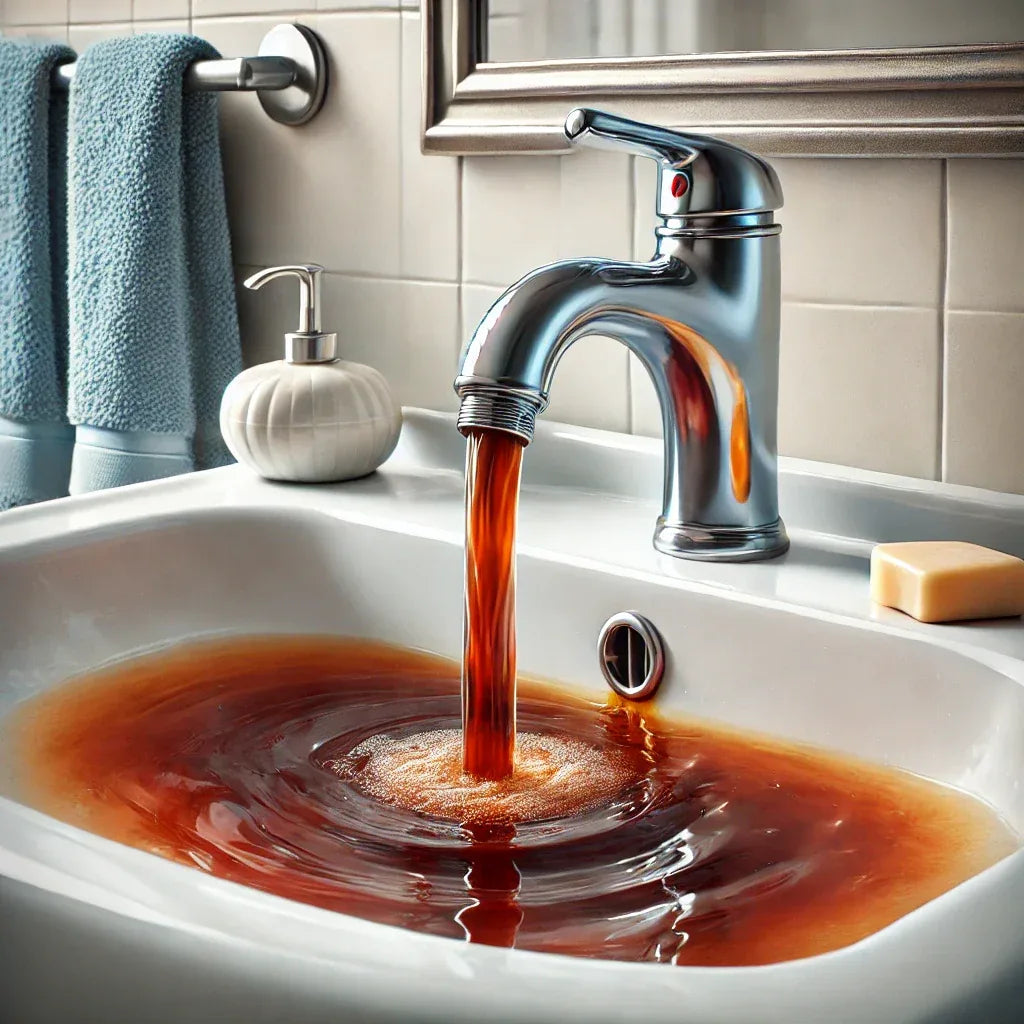
Most well owners identify an iron problem from symptoms rather than testing — meaning by the time staining appears, the contaminant has typically been present, and cycling through the softener, for months already.

  • Particulate Iron (Ferric) — already oxidized before reaching your pipes, visible as reddish-brown sediment or orange staining on contact, and the form most likely to clog aerators. Addressed by: sediment pre-filtration ahead of Iron Master AIO.
  • Manganese — produces black or dark brown deposits and a bitter, metallic taste distinct from iron's. Fouls resin in the absence of pre-treatment. Addressed by: Iron Master AIO, alongside iron.
  • Hydrogen Sulfide — the rotten-egg odor, most pronounced with hot water. Occurs independently of iron in some wells, depending on aquifer geology and bacterial activity — worth stating because its presence doesn't correlate with hardness or iron test results. Addressed by: Iron Master AIO's air injection mechanism.
Iron Bacteria:

Reddish-brown slime and a musty odor. This is the one contaminant on this list that filtration alone does not resolve — an established colony requires shock chlorination of the well itself before new equipment is installed, or the new system will be recontaminated within weeks.

A specific caveat worth stating plainly:

Iron concentration in a private well is not a fixed value. Seasonal variation, rainfall events, pump depth changes, and aging well casings can shift levels meaningfully over time — a test result from two years ago does not confirm current conditions. Annual retesting of iron, manganese, pH, and hardness is the documented minimum monitoring interval for a well used as a primary supply.

Section Image

Why Testing Is a Prerequisite for Correct Sizing, Not an Optional Precaution

Well water conditions vary meaningfully by geography and aquifer — a configuration correct for a limestone-aquifer well is not necessarily correct for a glacial-till well. Ordering without testing means sizing by assumption rather than measurement, which produces one of two outcomes: an inadequate system, or an unnecessarily expensive one.

A complete panel should specifically cover: total hardness, iron (total and dissolved), manganese, pH, TDS, and hydrogen sulfide. Wells near agricultural land should add nitrates and coliform bacteria. Properties with galvanized or copper supply lines should add lead and copper testing.

Testing options, with the specific tradeoff of each:

State-Certified Lab:
The most accurate and comprehensive option, typically $100–$300 for a full panel; most state health departments maintain certified lab lists.
Mail-In Kits:
Adequate specifically when they report iron, manganese, pH, and hardness as individual figures rather than an aggregate TDS reading, which lacks the specificity needed for treatment planning.
In-Home Test Strips:
Useful for an initial orientation, not accurate enough to base a sizing decision on.
Complimentary Test From Our Team:
Available before ordering, either arranging a kit or reviewing existing results. The specific inputs needed: total iron (ppm), manganese (ppm), H₂S presence, pH, and hardness (GPG).
Section Image

What a Correct Point-of-Entry Installation Specifically Requires

The system installs where the pressure tank feeds the main household supply — the placement required for whole-house treatment. Where a filter package is included, the sequence is a mechanical requirement, not a preference: well pump → pressure tank → iron filter (Gold/Gold+) → water softener → household supply. Reversing this order exposes the softener resin to untreated iron, triggering the fouling mechanism described in Block 4.

Installation sequence:

  • Identifying the installation location — ideally before the pressure tank, or immediately after on the supply line.Shutting off the well pump at the breaker and releasing line pressure before cutting in
  • Connecting filter and softener in the required upstream sequence, each with an independent bypass valve.Routing drain lines from both control valves.Connecting both units to standard 110V power
  • Programming both systems with hardness level, iron concentration, and household usage.Running a manual backwash on the filter and manual regeneration on the softener before regular service begins
Two well-specific requirements worth stating directly:

Bypass outdoor spigots and irrigation lines — softening water that never enters the house wastes salt with no benefit. And if iron bacteria are suspected and the well hasn't been recently shock-chlorinated, that step needs to happen before commissioning the new system — otherwise recontamination within weeks is the documented outcome.

Live support is available specifically from specialists with well water configuration experience, by phone or video, during business hours.

Section Image

What Coverage Specifically Includes, Structured Around Well Water's Demands

  • Limited Lifetime Warranty covers the control valve and core components — a coverage term specifically appropriate given the more demanding conditions well water systems handle (variable mineral loading, iron exposure, higher regeneration frequency than any city water application requires). No expiration date; transferable if the property is sold.
  • 60-Day Money-Back Guarantee — the window is specifically sized to allow multiple regeneration cycles under actual well water conditions rather than a brief initial impression, providing enough time to confirm whether rust staining has stopped, water heater performance has changed, and metallic taste has genuinely cleared. If not satisfied within that window, for any reason, the return process is direct.
  • What warranty support specifically involves — Direct contact with the team that configured the original purchase, not a third-party claims processor Remote diagnosis as the first step — resolving most issues by phone or video without a parts shipment Immediate dispatch of replacement components once a diagnosis confirms a warranty-covered issue
Warranty Details

Eight Mechanisms, Each With a Specific Function Tied to Well Water Conditions

Icon

Precision Variable Brining

Pre-calculates roughly 70% of estimated brine before a cycle, then the precise remainder for the specific depleted portion of resin. This is the specific mechanism behind the up-to-30%-savings figure versus fixed-brine designs, and its effect compounds specifically because well water regenerates 4–7 times monthly rather than 2–4.

Icon

Soft Water Quick-Recharge

Triggers a 15-minute correction when capacity drops below 3%, ahead of the scheduled 2 AM full cycle — preventing hard water breakthrough during unexpectedly high-demand periods without requiring a fully separate regeneration.

Icon

Smart Clean Auto-Sanitize

A 7-day zero-flow threshold triggers an automatic sanitizing cycle, addressing the elevated iron bacteria colonization risk that stagnant well water resin specifically carries (a risk less relevant to municipal-supply resin beds).

Icon

Soft Water Brine Tank Refill

Refills using already-softened water rather than raw well water, preventing the specific accumulation of trace iron in brine solution over successive cycles that raw-water refilling would otherwise cause.

Icon

Vacation Mode

Suspends scheduled regeneration during confirmed non-use, while retaining the 7-day sanitizing override as a safeguard against the same stagnation risk.

Icon

Auto System Refresh

The same 3%-threshold correction described above, specifically relevant where iron-adjusted hardness (Block 10) depletes resin faster than an equivalent city water system would experience.

Icon

Auto Reserve

Maintains approximately 15% capacity in reserve, calibrated to observed household consumption. Less precisely calibrated systems require 25–30% reserves to achieve the same reliability margin — meaning a larger proportion of this system's total capacity is actively available rather than held back as a buffer.

Icon

48-Hour Battery-Free Memory

Retains programmed settings through power interruptions of up to 48 hours, a specification with particular relevance for rural properties where storm-related outages occur more frequently than in urban service areas.

Section Image

Why the Standard Sizing Formula Requires a Well-Specific Adjustment

The standard formula — household size × 75 gallons/person/day × hardness (GPG) — is calibrated for city water and, applied unmodified to well water, produces a specific and predictable error: undersizing, because it doesn't account for iron's effect on resin capacity.

The iron adjustment, and its basis:

Dissolved iron occupies resin exchange sites in the same way hardness minerals do. The documented industry approximation treats each 1 ppm of iron as equivalent to roughly 4 additional GPG of hardness for capacity-planning purposes. Water testing at 15 GPG with 2 ppm iron should be sized as though it were approximately 23 GPG — a meaningfully different sizing outcome than the raw hardness figure alone would suggest.

The regeneration frequency adjustment:

Well water systems typically regenerate 4–7 times monthly versus 2–4 for equivalent city water systems, a direct consequence of iron's contribution to resin depletion. Sizing one capacity tier above the formula's raw result provides margin against this higher frequency.

Sizing reference:

  • 1–2 people, under 15 GPG, under 1 ppm iron — 32,000 grains
  • 2–4 people, 10–20 GPG, 1–3 ppm iron — 40,000–48,000 grains
  • 4–6 people, 15–25 GPG, or 3+ ppm iron — 48,000–64,000 grains
  • Any household, above 25 GPG or iron above 5 ppm — 64,000 grains, paired with Iron Master AIO
Choosing between KDF and Iron Master AIO — the distinction stated directly, since product pages in this category often leave it implicit:

Softener Only is appropriate only below 0.3 ppm iron — above that threshold, the fouling mechanism in Block 4 applies regardless of grain capacity.

Gold (KDF) is rated for dissolved iron up to approximately 3–5 ppm, provides limited manganese reduction, and does not address hydrogen sulfide. It requires 6–10 GPM pump flow to operate correctly.

Gold+ (Iron Master AIO) is rated for dissolved and particulate iron up to 30+ ppm, provides effective manganese removal, and oxidizes hydrogen sulfide — a broader contaminant scope than KDF, at correspondingly higher investment, and it must be matched to your specific pump flow rate (Block 11) to backwash effectively.

The most reliable approach: obtain a full water test, share the results with our team, and receive a specific package confirmation rather than estimating from general guidance — since KDF and Iron Master AIO solve genuinely different problems at different concentration ranges.

Section Image

The Single Specification That Determines Whether Gold+ Will Function as Rated

A filter requiring 10 GPM to backwash correctly, installed on a pump delivering 6 GPM, does not fail immediately or obviously — it fails to clean its own media bed adequately, and iron removal performance degrades over the following weeks, often after the installation appears successful.

Measurement method:

Shut off every tap in the home. Locate an outdoor spigot near the pressure tank. Run it fully open for 30 seconds to stabilize flow. Time how long it takes to fill a 5-gallon bucket. Divide 5 by that time in seconds, then multiply by 60. Example: a 45-second fill time yields 5 ÷ 45 × 60 = 6.7 GPM.

  • 6–7 GPM — the standard Iron Master AIO configuration, sufficient for most residential wells and for Gold's KDF filter at any size
  • 8–10 GPM — required for the mid-size AIO configuration, typical of newer high-output pumps or shallow well jet pumps
  • 11+ GPM — high-flow configuration, appropriate for larger properties with correspondingly higher-output pumps

If your flow rate is uncertain, or your pump may be underperforming its original rating, this is specifically the information to confirm with our team before ordering Gold+ — a five-minute conversation prevents a mismatch that would otherwise surface only after installation, when it's considerably more disruptive to correct.

Cost Categories Specific to Untreated Well Water, Beyond What City Water Softening Addresses

Well water households incur the same softening-related savings city water households do — reduced detergent use, improved water heating efficiency — plus additional cost categories specific to iron and manganese exposure:

Icon

Plumbing and Fixtures

Iron staining that has set into porcelain or stainless steel does not respond to standard cleaning, requiring fixture replacement; iron-laden water also produces pipe-restricting scale over years. Entry-point treatment prevents both costs before they accrue.

Icon

Water Heater and Appliance Life

The combination of hardness scale (thermal insulation on heating elements) and iron corrosion is documented to reduce water heater service life from a typical 12–15 years to as few as 5–8 in severe cases.

Icon

Detergent and Cleaning Products

Untreated well households require measurably more product for equivalent cleaning results, a consequence of the same lathering interference hardness causes on city water, compounded by iron residue.

Icon

Bottled Water and Point-of-Use Filters

Metallic taste and sulfur odor are the specific drivers of bottled water reliance in untreated well households; whole-house Gold+ treatment removes the underlying cause rather than addressing it at a single point of use.

Icon

Cleaning Labor

Rust rings, orange sediment, and scale each require recurring manual effort that treated water eliminates by removing the source rather than managing the symptom.

Icon

Payback

the combination of these avoided costs typically brings full system payback within the warranty period for rural well households, based on the documented cost categories above.

Section Image

The Specific Failure Mode Behind Most Premature Well Softener Underperformance

Dissolved ferrous iron competes for the same resin exchange sites as calcium and magnesium, but — critically — does not release from those sites cleanly during a standard regeneration cycle. Instead, it accumulates as iron hydroxide across successive cycles, progressively reducing effective softening capacity. A resin bed rated for 48,000 grains can decline to a genuinely usable capacity of 30,000 or even 20,000 grains after several years of unmitigated iron exposure — a specific, documented degradation pattern rather than a generic "wears out over time" claim.

Specific indicators this is occurring:

  • Regeneration frequency increasing without a corresponding increase in actual household usage
  • Hardness symptoms returning despite the softener operating on its normal schedule
  • Visibly orange or reddish-brown resin coloration during a brine tank inspection.Slower-than-normal brine draw during a regeneration cycle
The corrective measure:
A liquid iron resin cleaner, added to the brine tank ahead of a cycle, dissolves accumulated deposits and restores a meaningful portion of exchange capacity. This is a periodic maintenance step rather than a one-time correction, and is specifically recommended annually where incoming iron exceeds 0.5 ppm even after upstream filtration.
How the Elite's design reduces this risk from the outset:
Upflow regeneration is documented to flush iron more effectively from the upper resin bed than downflow brining. The soft water brine refill (Block 9) prevents iron accumulation in the brine solution itself. And the higher regeneration frequency the valve maintains under well conditions reduces the interval during which iron deposits can accumulate unnoticed — three separate, specific mechanisms working together rather than one general design philosophy.
Section Image

Why This Category Specifically Benefits From Individualized Guidance Rather Than Standardized Recommendations

Iron species, pH, manganese, sulfur presence, pump flow rate, well depth, and aquifer geology each affect the correct configuration independently — and because these variables interact (iron-adjusted sizing, flow-rate-dependent filter selection), a generic recommendation carries meaningful risk of producing an inadequate or mismatched system. Support is structured specifically around this complexity:

  • Pre-purchase — water test review to confirm grain capacity, package, and configuration for your specific chemistry
  • Sizing — assistance calculating or verifying pump GPM before an order involving the Iron Master AIO
  • Installation — live phone and video support for single-unit and multi-system configurations
  • Ongoing — maintenance guidance including resin cleaner timing, iron filter media monitoring, and annual retesting recommendations

Frequently Asked Questions

How much salt does the system use on well water?
More than an equivalent city water configuration, specifically because iron increases regeneration frequency. A typical 3–4 person household with moderate hardness and low-to-moderate iron uses one 40-lb bag every 6–10 weeks. The upflow design's per-cycle salt reduction still applies and is proportionally more significant here, given the higher cycle count.
Will this reduce my water pressure?
Not meaningfully from the softener itself, which uses full 1" internal plumbing. Any pressure effect is more likely attributable to an upstream filter, since both KDF and the Iron Master AIO introduce some resistance through their media beds. Sharing your pump's pressure specification with our team before ordering allows this to be assessed specifically rather than generally.
How often will it regenerate?
Typically 4–7 times monthly versus 2–4 for an equivalent city water system, a direct consequence of iron's contribution to resin depletion (Block 10). Precision brining is the specific mechanism that keeps the salt cost of this higher frequency lower than a conventional system would produce.
Do I need to test before ordering?
Yes — iron level and pump flow rate are the two specific inputs that determine correct package and sizing. Ordering without them means configuring by estimate. A complimentary review of your results is available before finalizing an order.
What is the specific difference between Gold and Gold+?
Gold's KDF filter is rated for dissolved iron up to approximately 3–5 ppm and does not meaningfully address sulfur or manganese. Gold+'s Iron Master AIO addresses iron up to 30+ ppm, manganese, and hydrogen sulfide simultaneously, and requires a confirmed minimum pump flow rate to backwash correctly. The presence of sulfur odor, manganese staining, or iron above 5 ppm is the specific indicator that Gold+ is the appropriate configuration.
Can I add filtration later if I start with just the softener?
Technically yes, but if iron is already detectable in your water, starting without pre-treatment allows the fouling mechanism described in Block 13 to begin accumulating from the first regeneration cycle. Configuring correctly from the outset avoids this rather than requiring remedial resin treatment later.
What additional maintenance does well water require?
The standard salt checks and annual brine tank cleaning apply regardless of water source. Well water specifically adds periodic resin cleaner treatment (annually, if incoming iron exceeds 0.5 ppm even after filtration) and annual retesting to confirm iron, hardness, and pH haven't shifted since installation.
Does Smart Clean address iron bacteria specifically?
It reduces the risk of bacterial growth during periods of stagnation but does not resolve an already-established colony within a well casing. Where iron bacteria are present, shock chlorination of the well itself is required before the new system is commissioned; Smart Clean then functions as ongoing protection rather than a remedial treatment.