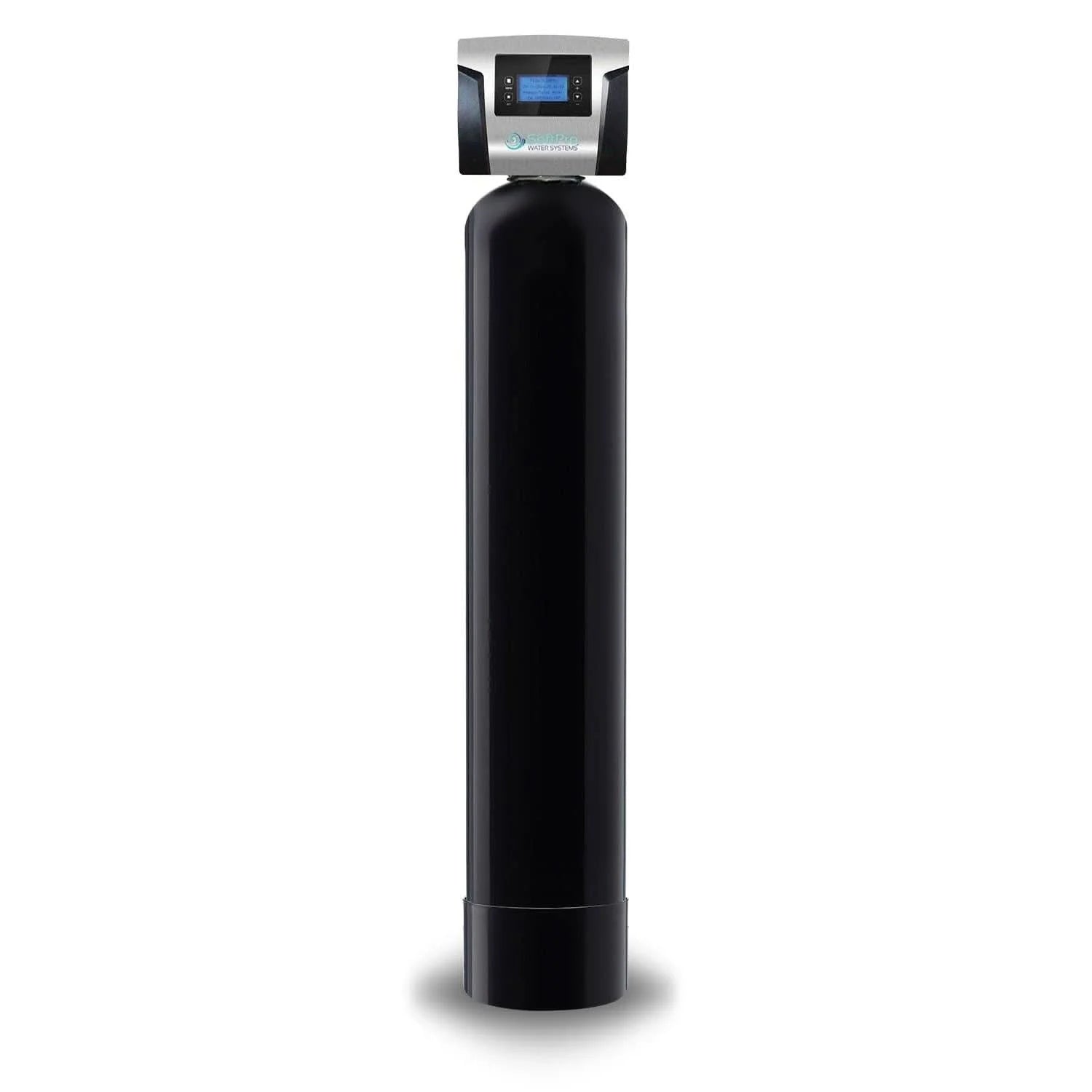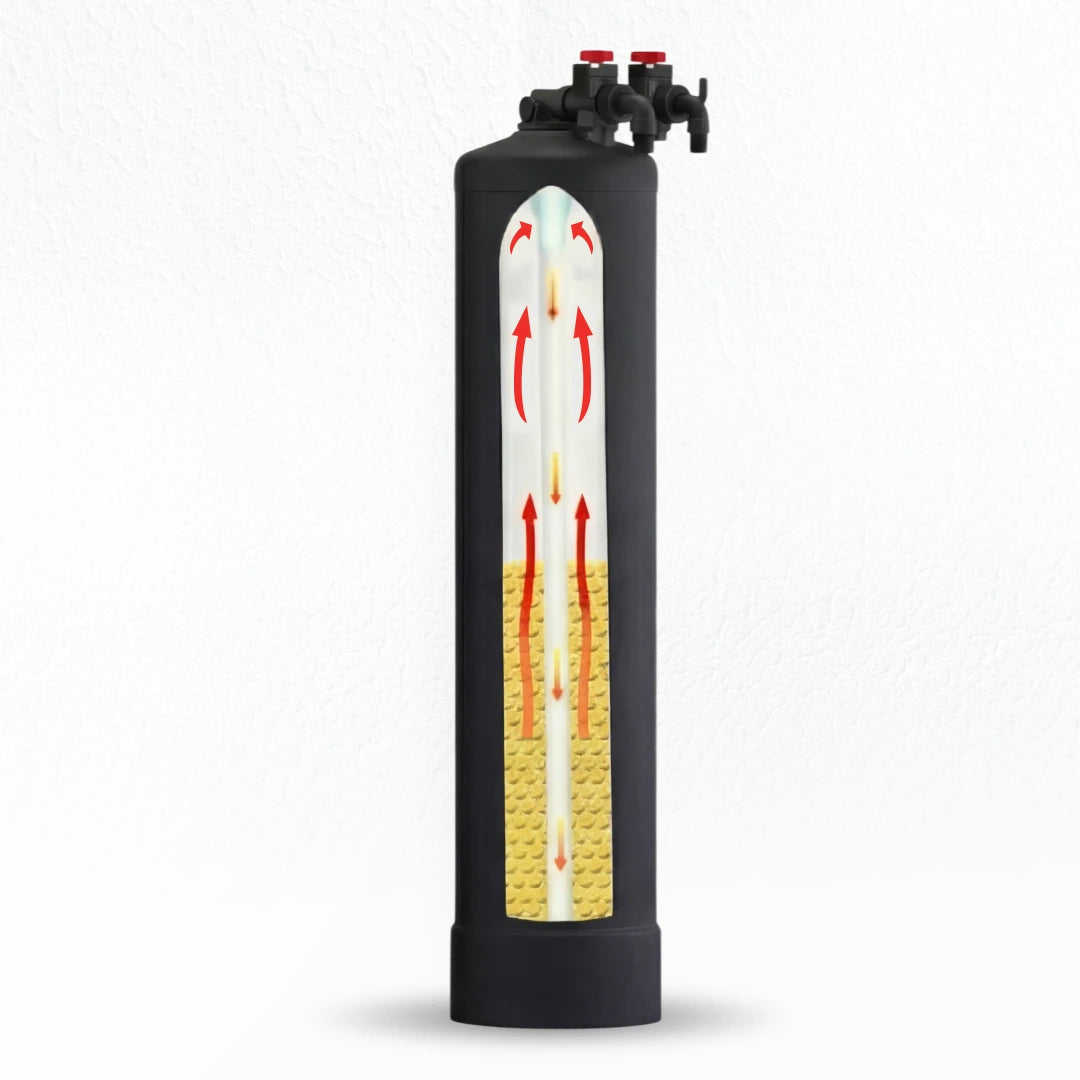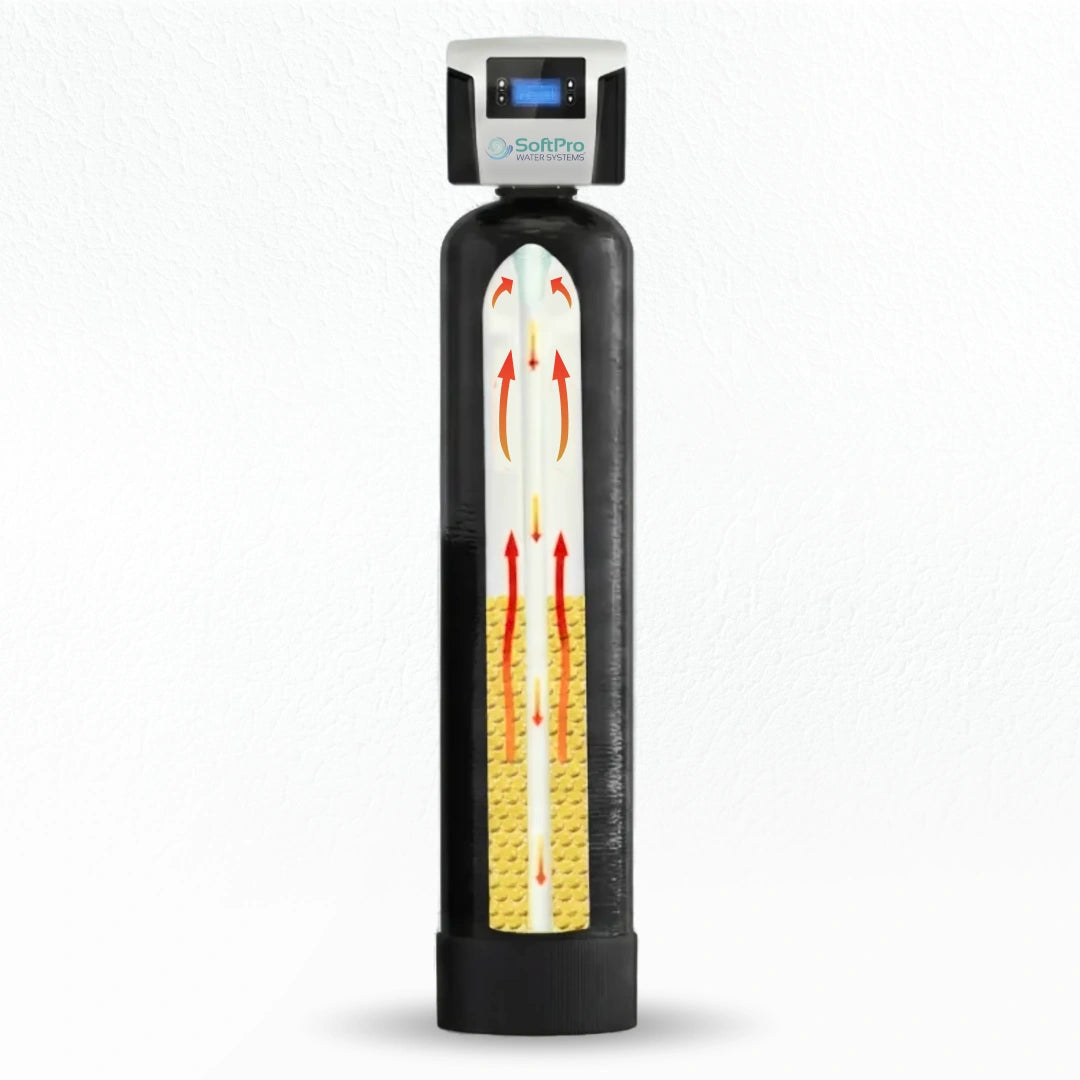
SoftPro Catalytic Whole House Carbon Filter for Well Water

Auto-Backwash | Centaur Catalytic Carbon Media | Four SizesEliminate Sulfur Odor, Organic Compounds, and Chemical Contamination From Your Private Well — at Every Tap in Your Home

$1,453.75
$1,099
Save 24%
In stock. Shipped within 1-3 days.
  • check FACTORY-DIRECT SAVINGS
  • check BUILT IN USA
  • check EASY INSTALLATION
  • check FREE SHIPPING
  • check LIFETIME WARRANTY
  • check 60-DAY MONEY BACK GUARANTEE
1.0 cuft - 1 to 2 bathrooms (Min. Pump 6-7 GPM req.)
1.5 cuft - 2 to 3 bathrooms (Min. Pump 6-7 GPM req.)
2.0 cuft - 3 to 4 bathrooms (Min. Pump 8-10 GPM req.)
2.5 cuft - 4 to 5 bathrooms (Min. Pump 11+ GPM req.)

100% Secure Checkout

Guaranteed Secure

  • American Express
  • Apple Pay
  • Diners Club
  • Discover
  • Google Pay
  • Mastercard
  • PayPal
  • Shop Pay
  • Visa
06 Jul 2026
Order Received
08 Jul 2026
Order Shipped
10 Jul 2026
Estimated Delivery

Remove Sulfur Odor, Iron, Manganese, and Well Water Contamination

Without Chemicals

Well Water Filtration Has Never Been Easier — or More Effective

Private well water is shaped entirely by what exists in the ground beneath your property.

When a well draws from an aquifer with sulfur-bearing geology or harbors sulfur-reducing bacteria in its casing, the result is unmistakable: a rotten egg smell that follows the water through every pipe, every shower head, and every glass. When the aquifer passes through soil contaminated by decades of agricultural activity, pesticide and herbicide residues follow the water into the home. When organic matter in shallow formations leaches into the well, tannins and humic acids produce a yellow cast and an earthy taste that no amount of boiling or settling will remove.

These are NOT problems that a water softener addresses. They're NOT problems that an iron filter addresses. They're carbon filtration problems — and they require a carbon filter engineered specifically for the conditions of private well water, not a system designed for city water chemistry adapted with a different label.

The SoftPro® Catalytic Whole House Carbon Filter for Well Water uses Centaur catalytic activated carbon — a premium catalytic media specifically engineered for the demands of private well treatment — in an auto-backwash tank configuration that self-maintains its performance through scheduled cleaning cycles.

It removes hydrogen sulfide at concentrations that eliminate rotten egg odor at every outlet. It captures organic compounds, pesticides, herbicides, and VOCs across a broad spectrum. And it does all of this without chemicals, without salt, and without ongoing maintenance beyond an annual inspection.

• Eliminates rotten egg sulfur odor caused by hydrogen sulfide gas dissolved in well water — at concentrations that standard carbon CANNOT effectively address

• Removes pesticides, herbicides, VOCs, tannins, and the full spectrum of organic chemical compounds that enter private wells from agricultural and industrial sources

• Auto-backwash control valve maintains the media bed automatically — no manual cleaning, no performance decline from accumulated contaminants over time

• Four sizes matched to your well pump's flow rate — correct sizing is required for effective backwash and long-term performance (see sizing guide below)

Section Image

Why Well Water Requires a Different Carbon Filter Than City Water

Buyers who've researched whole-house carbon filtration will have encountered the SoftPro Chlorine+ Carbon Filter for city water and the Fluoride & Chlorine+ SUPER Filter — both upflow catalytic carbon systems designed for municipal water supplies.

This product is NOT a variant of those systems. It's a categorically different product built for a categorically different water chemistry challenge.

City Water Carbon Filters Are Designed for Disinfection Residuals

Municipal water carries chlorine or chloramine — disinfectants added by the utility. City water carbon filters are optimized to remove these compounds and the organic contaminants that accompany them in treated surface water. They don't need to address hydrogen sulfide, because municipal water doesn't contain it. They don't require auto-backwash, because clean city water doesn't load the media bed with the particulate and biological material that well water can carry. And they don't have pump GPM requirements, because city water pressure is regulated and consistent.

Well Water Carbon Filters Are Designed for Geological and Biological Contamination

Private well water carries whatever the aquifer contains — and that profile is specific to the geology, land use history, and biological activity in the formation your well draws from. Hydrogen sulfide from anaerobic bacterial activity or sulfur-bearing rock. Pesticide residues from decades of agricultural land use above the aquifer. Tannins from organic soil layers. VOCs from nearby industrial or storage activity.

These compounds require a high-capacity catalytic carbon media with the specific surface chemistry to address them — and a backwash system that can periodically clean the media bed under well water conditions without operator intervention.

The Auto-Backwash Difference

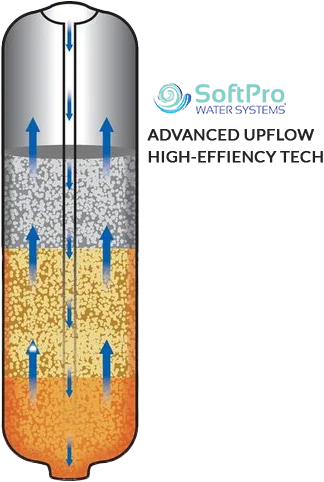
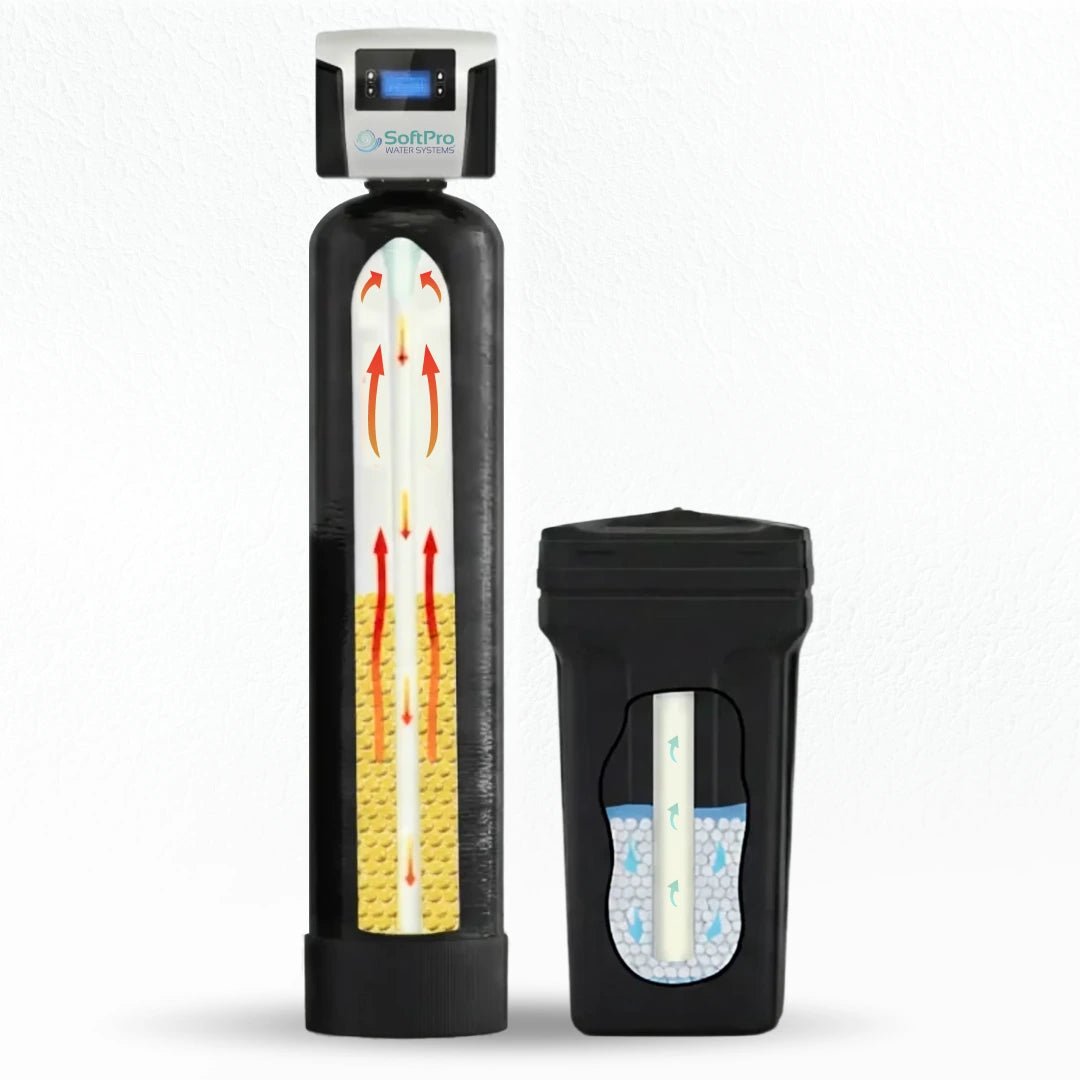
The city water Chlorine+ Carbon Filter uses upflow design to prevent channeling and extend media life on a clean municipal supply. The well water carbon filter uses an automated backwash cycle that periodically reverses flow through the media bed — lifting, agitating, and re-stratifying the carbon to flush accumulated particulate, biological matter, and spent contaminant load to drain.

On clean city water, this level of maintenance is rarely needed. On private well water, it's what keeps the media performing correctly year after year rather than progressively declining as the bed loads with the material that well water inevitably introduces.

Important: This system requires a minimum well pump flow rate for effective backwash. The backwash cycle reverses flow at a rate sufficient to lift and clean the media bed — a process that requires the pump to sustain a minimum GPM for the duration of the cycle. Installing a system sized beyond your pump's sustained output produces incomplete backwash, progressively degrading media performance. Measure your pump's flow rate before ordering (see sizing guide below).

What Is Centaur Catalytic Carbon

And Why It's Specifically Required for Hydrogen Sulfide Removal

The Centaur catalytic carbon media used in this filter is NOT standard granular activated carbon. It's not even standard catalytic carbon. Centaur is a purpose-engineered catalytic carbon product developed specifically for the water treatment challenges that standard carbon — including standard catalytic carbon — CANNOT adequately address at normal residential flow conditions.

Understanding why begins with understanding what hydrogen sulfide does to standard carbon and why that matters for well water treatment.

Q:  Why Standard Carbon Fails on Hydrogen Sulfide?
Standard granular activated carbon removes hydrogen sulfide through adsorption — the same mechanism it uses for chlorine and organic compounds. H₂S molecules attach to carbon surface sites and are removed from the water stream. The problem? H₂S adsorption on standard GAC is reversible under certain conditions and relatively slow, particularly at the dissolved gas concentrations found in residential well water. At normal household flow rates, the contact time between water and standard GAC is often insufficient for meaningful H₂S reduction, especially at concentrations above approximately 0.5 ppm. Well water with a noticeable sulfur odor typically contains H₂S at concentrations that require more than standard adsorption to address.
Q:  What Centaur Catalytic Carbon Does Differently?
Centaur catalytic carbon has a surface chemistry that catalyzes the oxidation of hydrogen sulfide — converting dissolved H₂S gas to elemental sulfur or sulfate compounds that are physically captured by the media bed and flushed to drain during the backwash cycle. This catalytic oxidation mechanism is dramatically faster and more complete than adsorption alone. The conversion happens on contact as water flows through the media, making it effective at the flow rates that residential use produces. The auto-backwash cycle then clears the accumulated sulfur compounds from the bed before they can reduce available catalytic surface area.
Q:  Centaur Carbon Versus Standard Catalytic Carbon for Well Water?
Standard catalytic carbon — the media used in the city water Chlorine+ and SUPER Filter products — performs excellently on chloramines, PFAS, and organic compounds in municipal water. For well water hydrogen sulfide at concentrations above approximately 1 ppm, the more aggressive catalytic surface chemistry of Centaur carbon provides meaningfully better H₂S oxidation and removal. This is why the well water carbon filter uses Centaur media rather than the standard catalytic carbon of the city water products — the contaminant being addressed and the concentration at which it appears in well water demand the more capable media.
Q: What Causes the Rotten Egg Smell and What the Filter Does About It?
The rotten egg odor that affects many private wells is one of the most immediately unpleasant water quality problems a homeowner encounters. It's also one of the most misunderstood. Many well owners attribute the smell to the water heater, to pipe corrosion, or to seasonal changes in their water table — all of which can contribute, but none of which addresses the root cause in most cases.
Q: What Causes Hydrogen Sulfide in Well Water?
Hydrogen sulfide forms in groundwater through two primary pathways. The more common is biological: sulfur-reducing bacteria that occur naturally in anaerobic (oxygen-free) environments — including well casings, pressure tanks, and deep aquifers — metabolize sulfate compounds and release H₂S as a byproduct. These bacteria thrive in the oxygen-depleted conditions of a sealed well system and can produce detectable H₂S concentrations even in wells drawing from otherwise clean aquifers. The second pathway is geological: wells drawing from formations containing sulfur-bearing minerals — pyrite, gypsum, or other sulfur compounds — can dissolve these minerals and carry dissolved H₂S directly from the rock into the well water.
Q: Why the Smell Is Worse in Hot Water and After Periods of Inactivity?
H₂S is a dissolved gas — it remains dissolved in cold water under pressure but volatilizes rapidly when water is heated or exposed to air at atmospheric pressure. This is why the rotten egg smell is typically most pronounced when the hot water tap runs, when water drains near an open drain, or when water has sat stagnant in pipes overnight. The cold water morning draw from a tap that's been closed all night carries more dissolved H₂S than the same tap run continuously. Understanding this pattern is useful for confirming that H₂S is the source of the odor rather than something else.
Q: What a Water Test for H₂S Tells You?
H₂S concentration in well water is typically measured in parts per million (ppm) or mg/L. Human smell detection for H₂S begins at concentrations as low as 0.0005 ppm — far below any meaningful health threshold, but sufficient to make water unpleasant. At 0.5 ppm and above, the odor is strong enough to affect all hot water uses significantly. At 1 to 5 ppm, the smell permeates the entire home during shower use. The SoftPro well water carbon filter addresses H₂S concentrations up to approximately 5 ppm effectively. Wells with H₂S above 5 ppm should be discussed with our technical team before ordering, as higher concentrations may require additional treatment upstream. Well shock chlorination and H₂S: If sulfur-reducing bacteria are confirmed in your well, shock chlorination of the well casing before commissioning the new filter system is strongly recommended. The filter addresses dissolved H₂S in the water — it doesn't eliminate the bacteria in the well casing that are continuously producing it. Eliminating the source through shock chlorination, followed by ongoing H₂S treatment through the carbon filter, provides the most complete and durable solution.

Three Steps to Odor-Free, Chemically Clean Well Water at Every Tap

Size Correctly and Place Your Order

Measure your well pump's flow rate before selecting a size (see the sizing guide below). Choose the CUFT configuration that matches your pump's sustained GPM and your household's bathroom count. Complete checkout securely free shipping is applied automatically.

Fast Free Shipping

Your order is processed and dispatched within 1–3 business days from the warehouse nearest your delivery address. Full tracking information is sent to your inbox when the label is printed.

Install and Experience the Difference

Connect the system to your well supply line following the guide and video walkthrough. Program the backwash schedule using the 4-line LCD control valve. The system takes over from there automatically backwashing on its schedule, maintaining the media bed, and delivering clean, odor-free water from every outlet in your home continuously.

SoftPro Elite Softener

Sizing Your Well Water Carbon Filter

Why Pump GPM Is the Critical Specification

Every size option for this filter comes with a minimum well pump GPM requirement and that requirement is NOT a suggestion.

The auto-backwash cycle is what makes this system maintenance-free. During backwash, the control valve reverses flow through the media bed at sufficient velocity to lift the carbon particles, agitate the bed, and flush accumulated material to drain. If the pump can't sustain the minimum GPM for the duration of the backwash cycle, the bed is NOT adequately cleaned. Over weeks and months, incompletely cleaned media accumulates contaminant load, channeling develops, and the system's performance progressively declines.

Every installation starts with one measurement: your well pump's sustained flow rate in gallons per minute. Here's how to take it.

Q: How to Measure Your Well Pump's Flow Rate?
• Shut off all water-using appliances and fixtures throughout the home — dishwasher, washing machine, irrigation, ice maker • Locate the outdoor hose bib or utility tap closest to the pressure tank • Open the tap fully and let it run for 30 seconds to reach steady-state operating pressure • Hold a 5-gallon bucket under the flow and time exactly how long it takes to fill completely • Divide 5 by the fill time in seconds, then multiply by 60 to get gallons per minute • Example: bucket fills in 42 seconds → 5 ÷ 42 × 60 = 7.1 GPM • Repeat the test twice to confirm a consistent result — if numbers vary significantly, your pump may be cycling or losing capacity
Q: How to Match Your Result to the Correct Size?
1.0 CUFT: 1 to 2 bathrooms | Min. Pump GPM: 6–7 GPM | Best For: Small homes and cottages with single-bathroom or spare bath configurations on moderate well water conditions | Backwash GPM: 6–7 GPM min. 1.5 CUFT: 2 to 3 bathrooms | Min. Pump GPM: 6–7 GPM | Best For: Most common residential configuration — handles the typical two to three bathroom family home with comfortable H₂S and organic compound loading | Backwash GPM: 6–7 GPM min. 2.0 CUFT: 3 to 4 bathrooms | Min. Pump GPM: 8–10 GPM | Best For: Larger homes with three to four bathrooms or higher daily water demand. Required when sulfur odor is more pronounced or when well water shows elevated organic compound concentrations | Backwash GPM: 8–10 GPM min. 2.5 CUFT: 4 to 5 bathrooms | Min. Pump GPM: 11+ GPM | Best For: Large properties with four or more bathrooms and high simultaneous flow demand. Also appropriate where well water quality is challenging enough that additional media contact time materially improves treatment results | Backwash GPM: 11+ GPM min. Aging pump caution: If your well pump is more than eight to ten years old, its actual output may be measurably lower than its rated nameplate capacity due to wear on the impeller and motor. Always test the actual flow at the tap rather than relying on the pump's rated specifications. An undersized backwash is the most common preventable cause of well water carbon filter performance problems — five minutes of measurement before ordering eliminates the risk entirely.
Section Image

Clean Well Water Without Chemicals

Advanced Filtration That Removes Stains, Odors, and Chemical Contamination

The SoftPro Catalytic Well Water Carbon Filter Is Built Different

Designed to solve the most frustrating private well water chemistry problems at the source — without chemical feed systems, without salt, and without ongoing consumables.

• Removes hydrogen sulfide at concentrations that produce noticeable rotten egg odor — eliminating the smell at every hot water outlet, every shower, and every tap in the home

• Addresses a broad spectrum of organic compounds, pesticides, herbicides, and VOCs that enter private wells from agricultural runoff, industrial sources, and natural geological dissolution

• Auto-backwash cycle self-maintains the media bed on a programmed schedule — no manual intervention, no performance decline, no filter service calls

• Pairs seamlessly with SoftPro Elite and ECO well water softeners — positioned upstream of the softener to protect resin from organic fouling while the softener handles hardness downstream

Section Image

Six months is a genuine evaluation window for a well water filtration system. Well water chemistry varies seasonally the sulfur odor that was most noticeable in summer when bacterial activity peaks, the turbidity that appears after spring rains, the taste changes that follow a dry autumn. Six months covers all of these variations and gives you the time to confirm that this system handles your well's specific conditions across its full seasonal range.

If within six months of delivery the system doesn't perform to your satisfaction for any reason, contact us. We'll walk you through a return process that's honest, straightforward, and free of unnecessary obstacles. We've been in well water treatment for over 30 years and we stand fully behind this product.

Warranty details
Section Image

What This System Removes at Its Full Capacity

Massive Well Water Contamination — No Problem

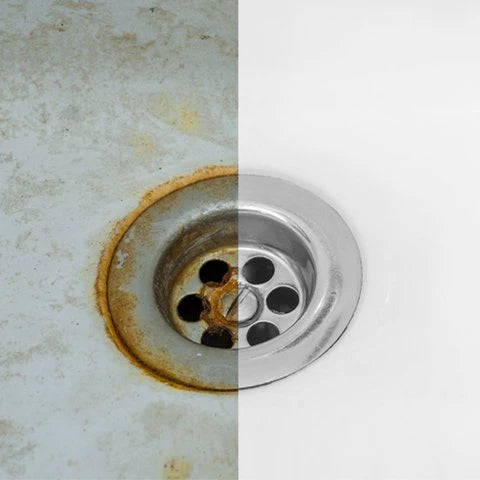
Well water doesn't present polite, manageable contamination levels. It can carry sulfur at concentrations that make an entire bathroom uninhabitable when the shower runs. It can carry organic compounds that accumulate invisibly in appliances and plumbing over years of unfiltered exposure. It can carry tannins that stain laundry, discolor bathtubs, and leave every surface the water touches slightly less clean than it should be.

The SoftPro Catalytic Well Water Carbon Filter is built for the upper end of what residential well water delivers — not just the mild, occasional concerns that a budget filter can address.

• Removes hydrogen sulfide up to approximately 5 ppm — sufficient to eliminate rotten egg odor in the vast majority of residential private well conditions

• Addresses manganese up to 7 ppm when occurring alongside H₂S — the catalytic oxidation mechanism that handles sulfide compounds also contributes to manganese reduction under these conditions

• Removes organic compound loads — pesticides, herbicides, VOCs, tannins, and humic substances — to provide water that tastes and smells genuinely neutral regardless of what the aquifer contains

SoftPro Stands Behind Its Products

Section Image

Lifetime Limited Warranty

Every SoftPro Catalytic Well Water Carbon Filter ships with a limited lifetime warranty covering the control valve and core system components. A well water filtration system operating under the demanding conditions of a private well supply — variable mineral loading, potential H₂S exposure, and scheduled backwash cycling — should be warranted for the life of the homeowner's ownership. That's the standard we hold ourselves to.

The media itself carries a separate and distinct service life — typically 3 to 10 years depending on your well water quality and household consumption. When media replacement is due, our team provides guidance on sourcing and replacement procedure. The system and its structural components are covered by the lifetime warranty regardless of media replacement cycles.

• Direct warranty support from the same team who handled your purchase — no third-party claims processor

• Remote diagnosis first — the majority of well water filter issues are identified and resolved by phone without any parts shipment

• Replacement components dispatched promptly when a component diagnosis confirms a warranty situation

Section Image

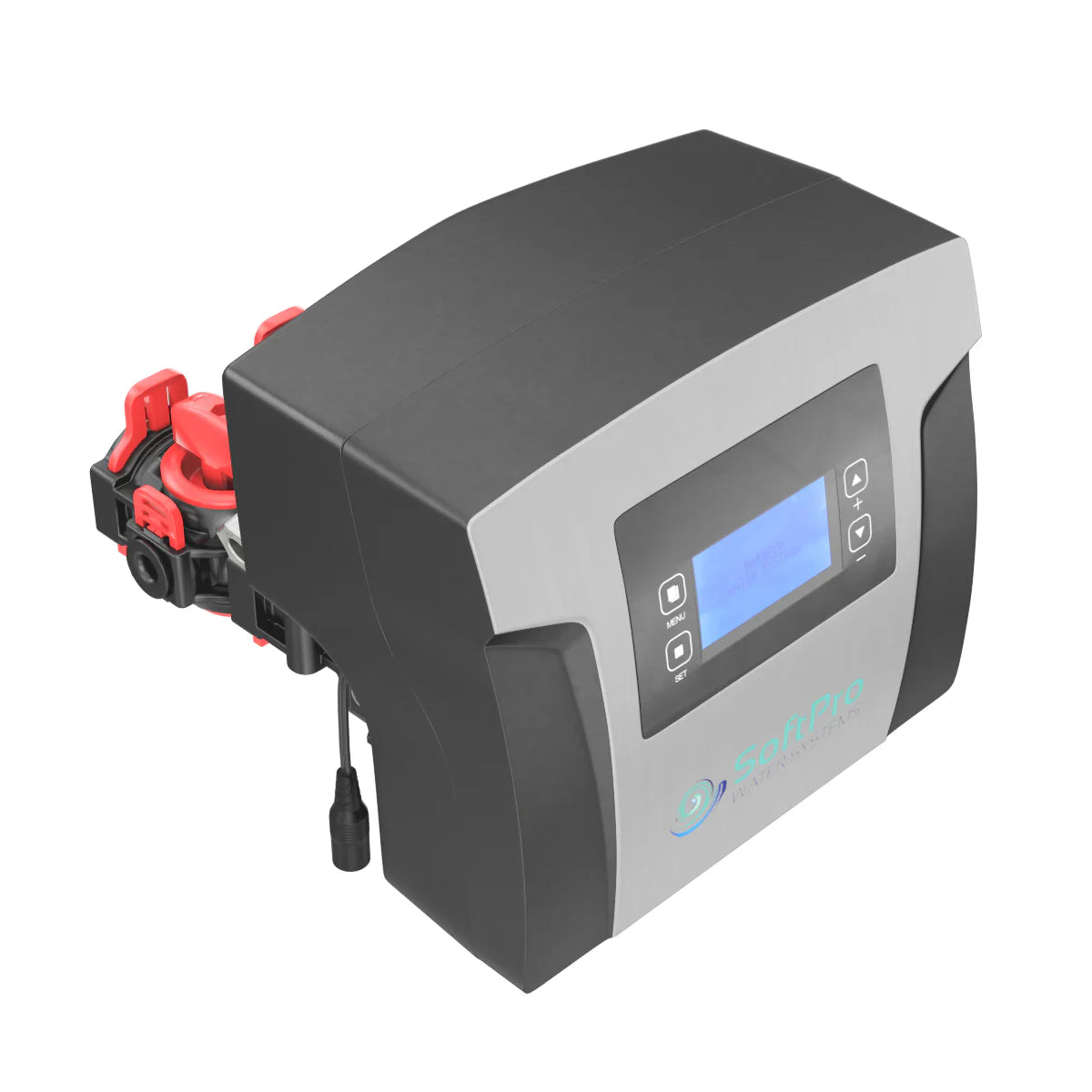
The Auto-Backwash Programmable Control Valve

What It Does and Why It Matters for Well Water

The control valve is the operational brain of the SoftPro Catalytic Well Water Carbon Filter. Unlike a passive upflow filter — which relies on the flow direction to minimize channeling but never actively cleans the media — this system's control valve executes scheduled backwash cycles that actively maintain the carbon bed's performance over time.

On a private well where the incoming water can carry biological material, fine sediment, and accumulated sulfur compounds from H₂S oxidation, this active maintenance is what separates a system that performs for 5 to 10 years from one that declines progressively within the first year.

Auto-Backwash Cycle: On a programmed schedule — typically every three to five days, adjusted based on your well water quality and usage — the control valve initiates a backwash. It reverses flow through the media tank at sufficient velocity to lift the carbon bed, agitate and re-stratify the media, and flush accumulated particulate and spent contaminant material to the drain line. The cycle takes approximately 15 to 20 minutes, then the system returns to normal service filtration automatically.

4-Line LCD Display: A large, clear 4-line LCD display shows current system status, backwash schedule, and program settings without complex codes or symbols. Programming the backwash schedule and reviewing system operation is straightforward — the display walks through each setting in plain language.

Intuitive Electronic Touchpad: Direct touchpad operation for all programming functions — no screwdriver adjustments, no hidden service menus, no codes to decipher. The touchpad interface is designed for DIY homeowners to program, adjust, and review settings without requiring a plumber or service technician.

Vacation Mode: When Vacation Mode is activated, the control valve pauses the scheduled backwash cycle for the duration of your absence — preventing unnecessary water use from backwash cycles while the house sits unused. If no water use is detected for seven consecutive days, the system performs a brief sanitizing refresh to prevent stagnation in the media bed before resuming normal operation.

48-Hour Battery-Free Memory: A self-charging internal capacitor retains all programmed settings — backwash schedule, time, date, and valve parameters — for at least 48 hours without mains power. Rural properties where storm-related power outages are more common benefit from this continuity — the system resumes its programmed schedule the moment power returns without any reprogramming required.

1" High-Flow Valve Ports: The control valve uses 1" internal plumbing ports to maintain strong household water pressure across the full range of simultaneous demand — multiple showers, appliances, and taps running at the same time — without the pressure drop that smaller-ported valves create under peak load.

Stop Bathing in Contaminated Water. Join 100,000+ Men Who Made the Switch.

100+ Real People. Real Results. Real Clean Water.

Thousands are making the switch to SoftPro. Find out why they're not looking back. 💧

Key feature #01
Key feature #02
Key feature #03
Key feature #04
Key feature #05
SoftPro Elite
Competitor #1
Competitor #2
Competitor #3
Competitor #4
Competitor #5
Swipe to scroll
Section Image

Does This Filter Replace an Iron Filter or a Water Softener?

These are the two questions every private well owner considering this system will ask, and both deserve a direct answer.

This Filter vs the Iron Master AIO Iron Filter Which Do You Need?

The Iron Master AIO is designed primarily for iron and manganese removal — it handles dissolved ferrous iron up to 30 ppm and manganese up to 7 ppm using air injection oxidation and Katalox media. It also addresses hydrogen sulfide as a secondary benefit.

The catalytic well water carbon filter is designed primarily for hydrogen sulfide, VOCs, pesticides, and organic compounds — it addresses trace iron and some manganese but is NOT a substitute for dedicated iron treatment where iron is the primary concern.

Choose the Iron Master AIO if: Your water test shows dissolved iron above approximately 0.5 ppm as the primary concern, with or without accompanying H₂S. The Iron Master's air injection and Katalox media directly address the iron loading that would foul a carbon filter's media rapidly.

Choose this carbon filter if: Your primary problem is sulfur odor, chemical taste, pesticide contamination, or organic compound loading — and your iron level is below approximately 0.5 ppm. Carbon fouling from iron at low concentrations is manageable; at higher concentrations, iron pre-treatment is required first.

Consider both in sequence if: Your water has both iron above 0.5 ppm AND significant H₂S or organic contamination. In this configuration, the Iron Master AIO installs upstream to address iron and heavy H₂S, followed by the carbon filter downstream for remaining organic compounds and residual odor. Contact us — this dual-system configuration requires careful sizing and sequencing.

This Filter vs a Water Softener — Which Do You Need?

A water softener and this carbon filter address completely different water quality problems. The softener removes dissolved calcium and magnesium — the minerals responsible for scale buildup, spotted dishes, and appliance wear. This carbon filter removes dissolved gases, organic compounds, and chemical contaminants. Neither system accomplishes what the other does.

For a private well with both hardness and sulfur or organic contamination — a combination that describes many rural well water households — both systems together provide complete treatment.

The correct installation sequence: iron filter (if needed) → well water carbon filter → water softener. The carbon filter upstream of the softener protects the softener's resin from organic fouling while the softener downstream handles hardness minerals.

BUY NOW
In Stock
  • American Express
  • Apple Pay
  • Diners Club
  • Discover
  • Google Pay
  • Mastercard
  • PayPal
  • Shop Pay
  • Visa

KEY FEATURES

Icon

Built To Hit Hard. Built To Last.

Iron. Manganese. Hydrogen sulfide. Massive amounts reduced without breaking a sweat. 💧

Icon

Nature Does The Heavy Lifting.

Air in. Iron out. AIO technology uses oxygen as a natural oxidizer to hit iron harder no chemicals, no shortcuts. 💧

Icon

Water Cleans It. Nothing Else Needed.

No chemicals. No additives. Just water doing what it does. 💧

Icon

Balanced. Mineral-Rich. The Way Water Should Be.

No more acidic water wrecking your body. Healthy minerals restored. Alkalinity dialed in. 💧

Icon

Top Shelf Tech. Full Flow. No Compromises.

1" ports. Full-featured. High efficiency. The control valve built for people who refuse to settle. 💧

see what our customers are saying

Because transforming your water transforms your life...forever!

Image banner

DANIEL R. - TEXAS

Verified Customer

I just wanted to say thank you for your excellent products and service over the past 12 years.

Image banner

JULIE M. - FLORIDA

Verified Customer

After we installed the Softpro Elite I noticed a significant difference in the house water quality.

Image banner

DAN T. - SOUTH CAROLINA

Verified Customer

Great customer service before and after my softener purchase!

ROY P. - CALIFORNIA

Verified Customer

Very impressed and satisfied with SoftPro's products and customer service!

Image banner

DENISE C. - NEW HAMPSHIRE

Verified Customer

Easy to install. Jeremy helped in making the right purchase!